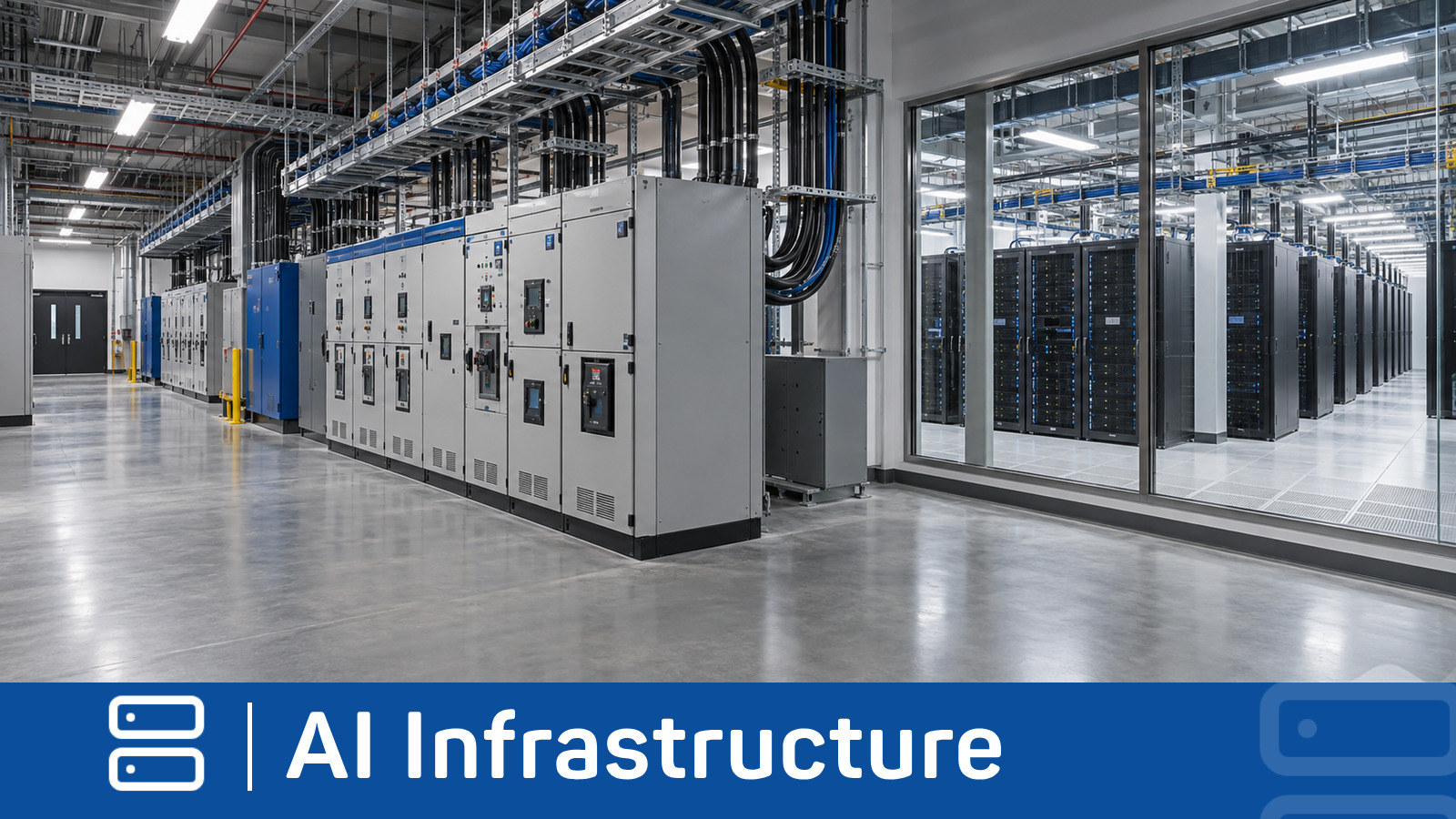
AI infrastructure has become a highly visible market conversation. That visibility is useful, but it also creates a risk: strategy can get ahead of the engineering decisions that determine whether infrastructure is dependable, adaptable, and economically workable in practice.
The next phase of the discussion needs to be more technical. Not narrowly technical in the sense of focusing on one component, but technical in the systems sense: how energy storage, AC/DC conversion, DC distribution, controls, and cyber resilience affect one another as AI loads change.
The issue is not simply more capacity
Capacity matters, but capacity alone does not describe a functioning AI-infrastructure system. Engineers must also consider how power is conditioned, how it is distributed, how storage behaves, how system conditions are monitored, and how operators protect and respond to changing conditions.
That is why familiar component-by-component decisions can become less reliable at higher densities and more demanding operating profiles. A technically credible plan must account for the interaction among design choices, not simply add more equipment to a legacy architecture.
Emerging technologies deserve disciplined evaluation
Many of the technologies receiving attention today are not yet the default choice. That is precisely why they need careful examination. The value of an emerging approach depends on its engineering tradeoffs, integration demands, maturity, reliability, cyber exposure, and fit with the specific problem being solved.
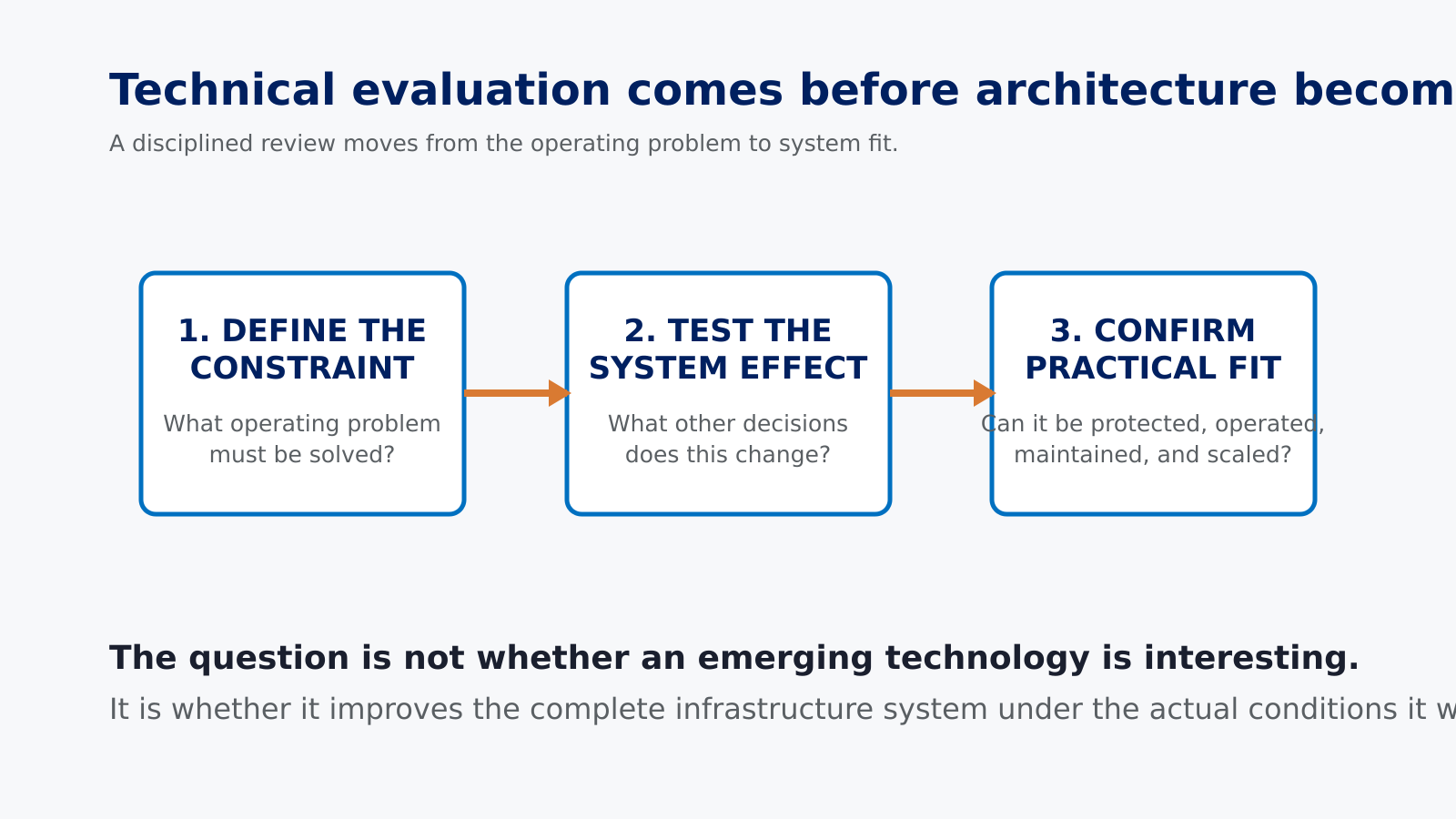
Good technical evaluation asks questions such as:
- What operating constraint is this technology intended to address?
- What other system decisions does it change?
- What must be true for the technology to perform as intended?
- What new maintenance, protection, monitoring, control, or cyber-security requirements does it create?
- Where does flexibility matter more than theoretical peak performance?
Ask the Questions That Come Before Standard Practice
Energy storage, high-frequency AC/DC conversion, high-current DC distribution, and digital-twin cyber defense deserve evaluation as connected infrastructure decisions. The purpose is to understand what is changing, what remains uncertain, and what evidence is needed before adopting an emerging approach.
Continue Your Infrastructure Decision
Explore AI Infrastructure for the broader decision context, then use the Technical Library to investigate the technical questions behind it.