Insights

AI infrastructure decisions are interconnected. Explore the seven decision areas shaping AI deployment, understand how they influence one another, and follow the analysis most relevant to your situation.

Explore the 7 Decision Areas

Start with the decision area most relevant to you. Each area connects to the core decisions, supporting analysis, and related issues an infrastructure leader should understand - from technology and deployment strategy to economics and market forces.

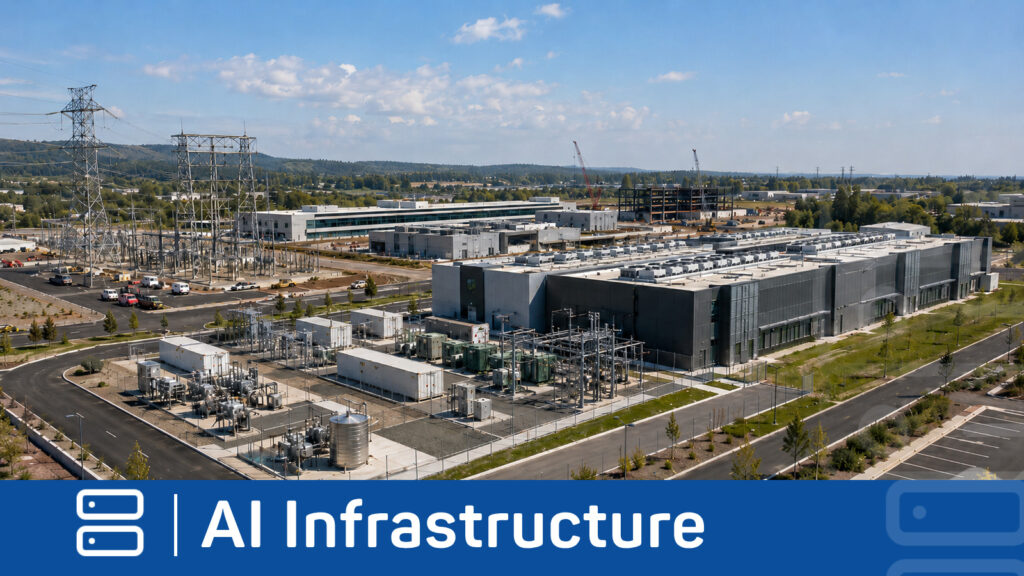
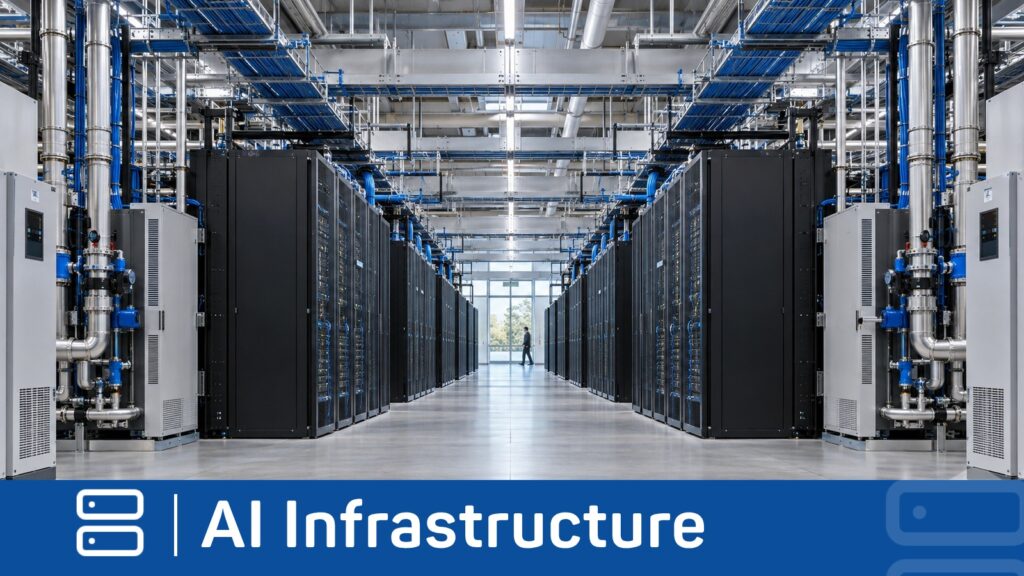
AI Infrastructure

Understand the systems that must work together to support AI workloads at scale - and how compute, power, cooling, networking, and deployment choices affect one another.

Explore AI Infrastructure ≫

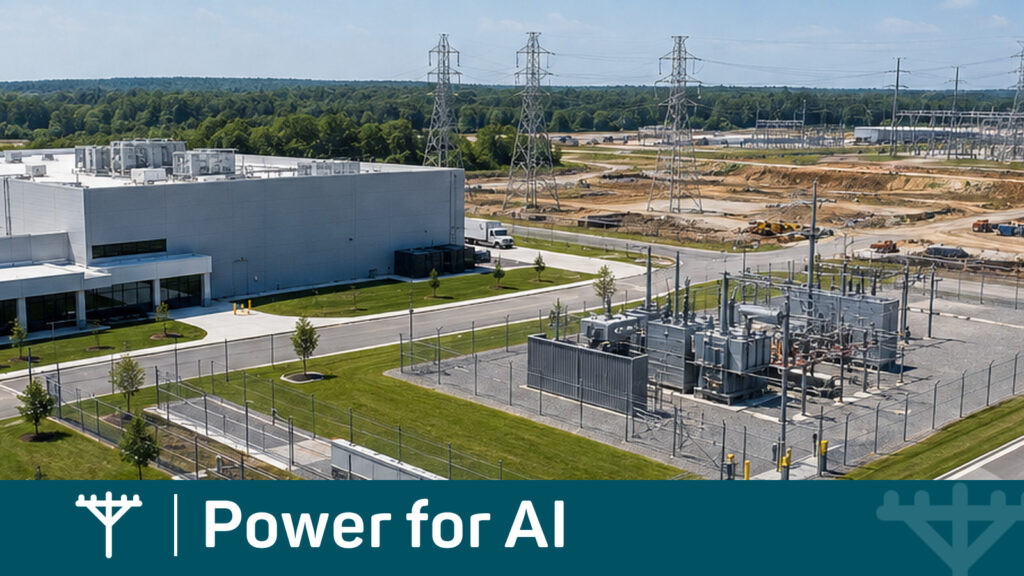
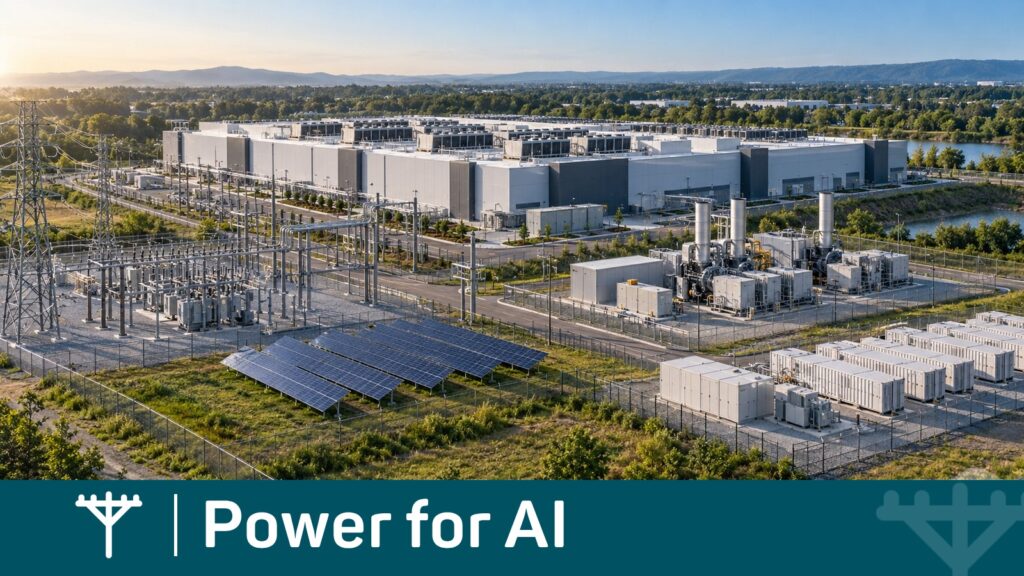
Power for AI

Explore whether the power you need can actually be delivered when you need it, and what generation, delivery, resilience, and transition options change that answer.

Explore Power for AI ≫

Data Center Architecture

Understand how architecture choices affect density, power, cooling, performance, scalability, and the ability to deploy capacity on the required timeline.

Explore Data Center Architecture ≫

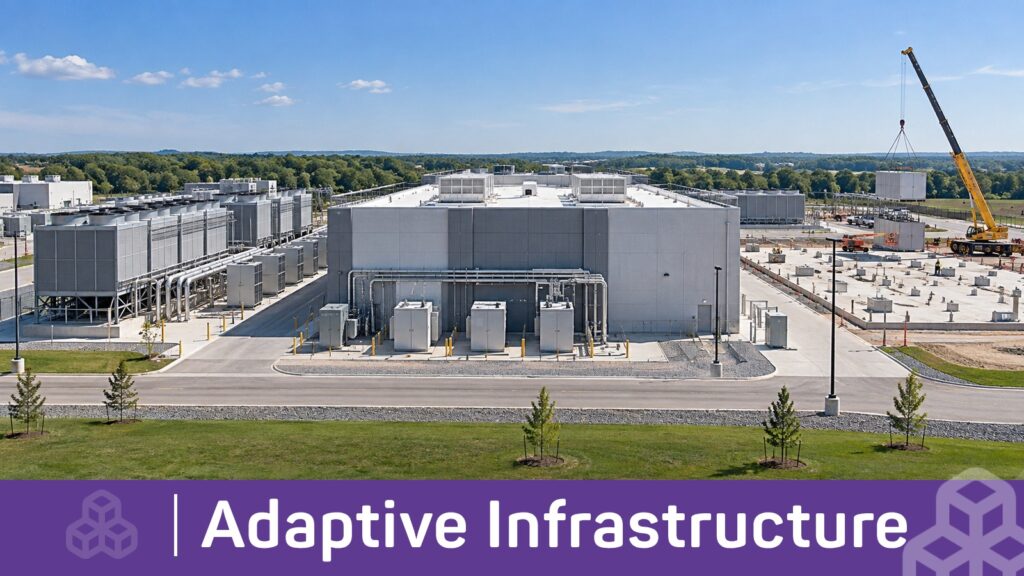
Adaptive Infrastructure

Explore how infrastructure can adapt to changing requirements without stranding investment, locking in today's assumptions, or limiting tomorrow's options.

Explore Adaptive Infrastructure ≫

Deployment Strategy

Understand how site, power, infrastructure, and capacity can be sequenced to reach usable capacity sooner while preserving a credible path to the end state.

Explore Deployment Strategy ≫

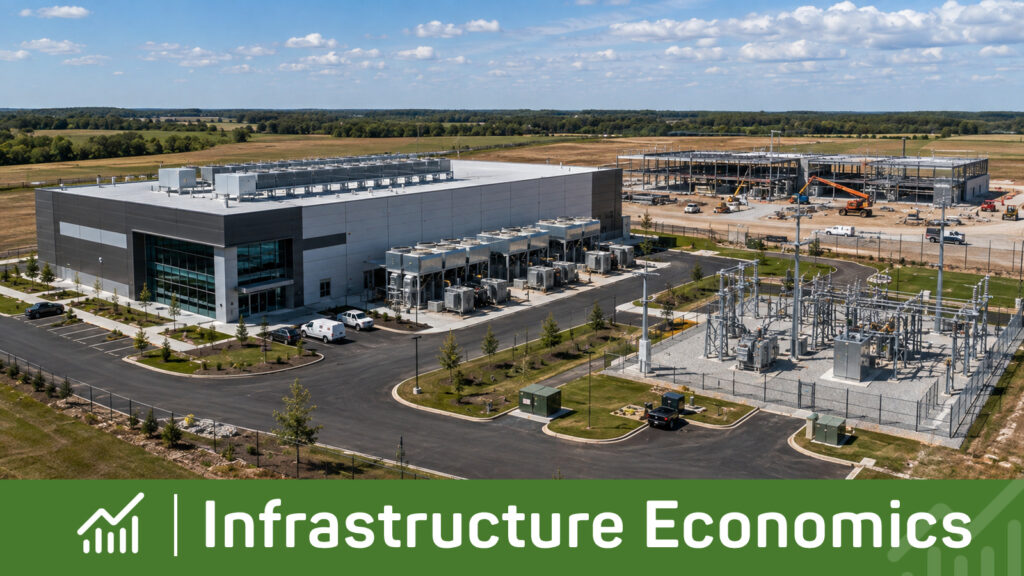
Infrastructure Economics

Explore how timing, capital, risk, and optionality change the economics - including when a higher-cost infrastructure choice can create the better business outcome.

Explore Infrastructure Economics ≫

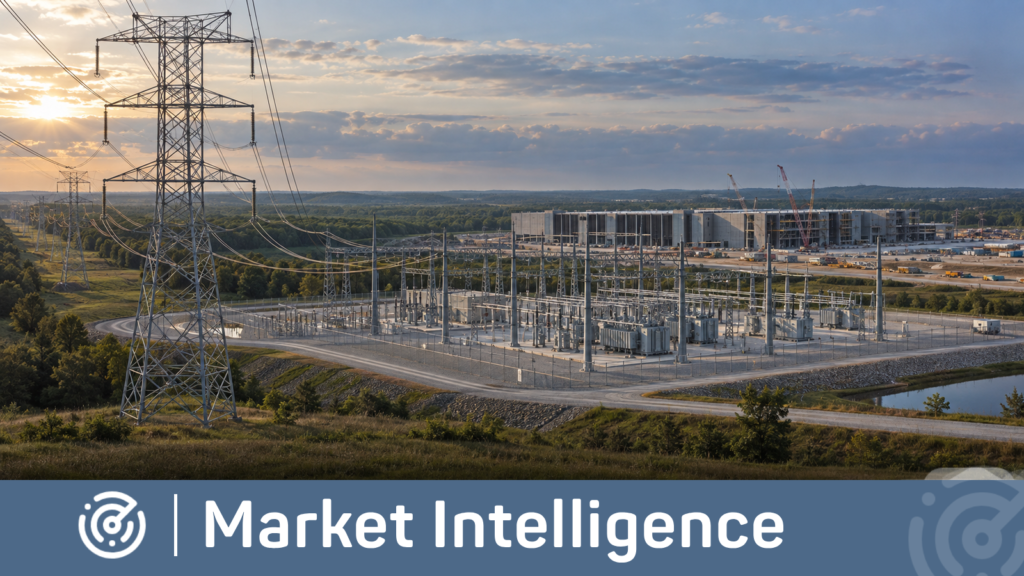
Market Intelligence

Track the utility, policy, technology, capital, and competitive shifts that can change infrastructure assumptions - and sometimes change the right decision entirely.

Explore Market Intelligence ≫

Not Sure Where To Start?

You do not need to know which decision area applies. Start with the constraint, uncertainty, or decision you are facing, and follow the evidence from there.

Power Is the Constraint

Utility service may not align with your deployment timeline. Explore how grid power, onsite generation, transition strategies, and sequencing can create a practical path to capacity.

Explore Power for AI ≫

The Systems Need to Work Together

Power, compute, cooling, networking, and site infrastructure cannot be planned in isolation. Understand how the systems connect and where one decision creates consequences elsewhere.

Explore AI Infrastructure ≫

Requirements Are Still Changing

Capacity, density, technology, and load profiles can change faster than infrastructure. Explore approaches that preserve options, support phased growth, and reduce the risk of stranded investment.

Explore Adaptive Infrastructure≫

The Business Case Has to Work

Speed alone is not enough. Understand how timing, capital deployment, utilization, risk, and optionality affect infrastructure economics and the long-term value of the decision.

Explore Infrastructure Economics≫

All Insights

Browse all published analysis, or select one or more topics to focus your exploration.
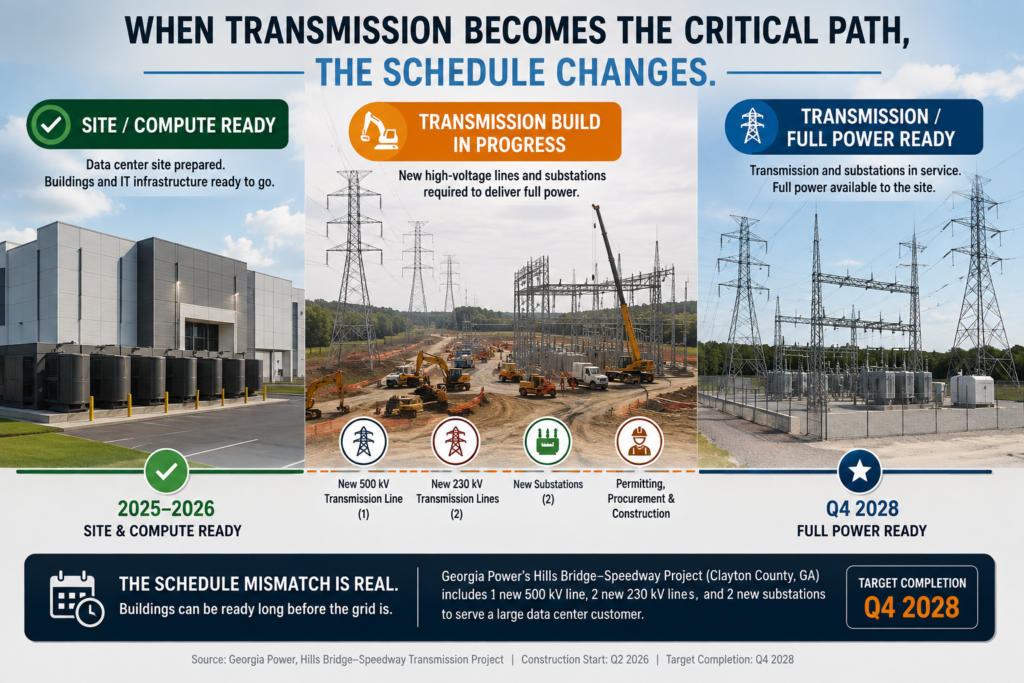
Georgia Power is building three high-voltage transmission lines and two substations to serve a large data center customer south of Atlanta. When
Your compute requirement and utility schedule no longer match. That does not automatically mean the project must wait for full grid capacity.
A data center's full completion date does not necessarily tell management when the investment begins creating value. For phased AI infrastructure, the
AI infrastructure increasingly runs on different clocks: compute platforms may change during development, data center construction follows another cadence, and grid connections
Data center power alternatives should be evaluated as operating configurations, not as a technology list. This framework compares utility-led, onsite, renewable, storage,
Adaptive AI infrastructure is more than modular equipment. It preserves stable safety, governance, and interface foundations while allowing power, cooling, compute, communications,
AI infrastructure is not merely a building filled with servers. It is a coordinated system in which power, distribution, cooling, compute, communications,
Compare energy storage architectures against response time, duration, safety, lifecycle cost, reliability, and integration requirements for AI-scale data centers.
AI infrastructure discussion often outruns engineering reality. The next conversation must focus on connected technical decisions shaping reliable, scalable deployment.
Good infrastructure decisions depend on a small set of facts that materially change the answer. The challenge is separating decision-changing information from
AI infrastructure is built by specialists, but it operates as one system. The critical decisions sit at the interfaces between power, distribution,
An OT alert does not choose the response. Define when to contain and when a separately isolated environment can support useful, bounded

CONTINUE YOUR INFRASTRUCTURE DECISION

Continue Your Infrastructure Decision

Explore the related Topic Hubs for decision context, then use the Technical Library to investigate the technical questions behind it.

Technical guidance for AI infrastructure decisions