Specialization is necessary. Isolation is not. The hardest AI infrastructure decisions usually sit where one engineering discipline changes the assumptions of another.
A data center can have a sound generation plan, a sound electrical design, a sound cooling design and a sound compute plan – and still miss the operating outcome the project actually needs. The reason is simple: those systems do not operate independently.
Power quality changes what downstream equipment sees. Rack density changes cooling demand and distribution requirements. Controls depend on trustworthy telemetry. Communications and cybersecurity affect how operators observe and act on the physical system. A capacity plan changes again when deployment is phased rather than completed all at once.
The useful question is therefore not whether every discipline has been engineered competently. It is: Have the interfaces between the disciplines been designed around the same operating states, constraints and decisions?
Specialists still matter
A systems conversation is not an argument against specialized engineering. Power, mechanical, compute, networking, controls and cybersecurity each require deep expertise and accountable practitioners. The mistake is allowing each discipline to optimize against assumptions that have not been reconciled with the others.
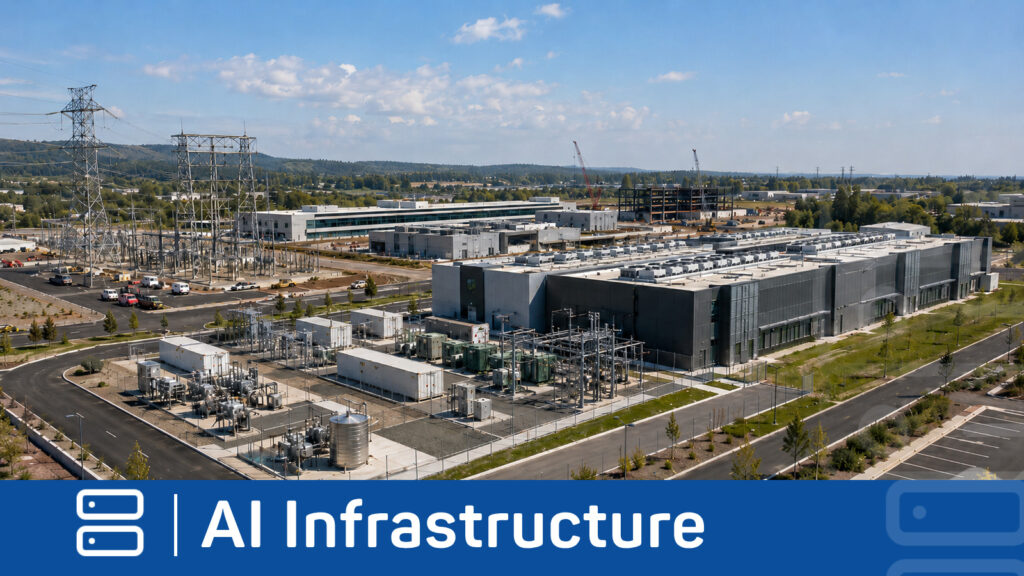
Blueflux organizes the infrastructure problem through six connected disciplines: generation/source, distribution and conditioning, cooling, compute, communications and cybersecurity. The point is not to collapse those disciplines into one team. It is to make their dependencies visible before they become commissioning problems, operating limits or expensive redesigns.
This extends the argument in AI Infrastructure Is Not a Facility. It Is a Coordinated Operating System. The facility becomes productive when the disciplines work together toward the same compute mission.
The interfaces are where assumptions collide
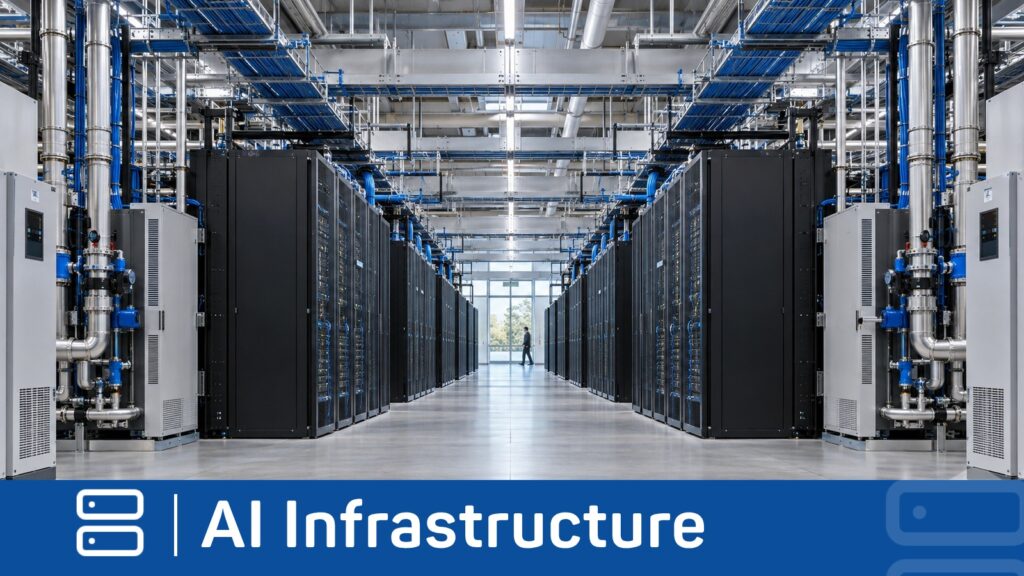
Consider a project that expects a particular rack-density profile. That assumption influences electrical distribution, conversion equipment, cooling architecture, piping, floor loading, network topology and maintenance access. If the compute plan changes during development, the effect is not confined to the server procurement.
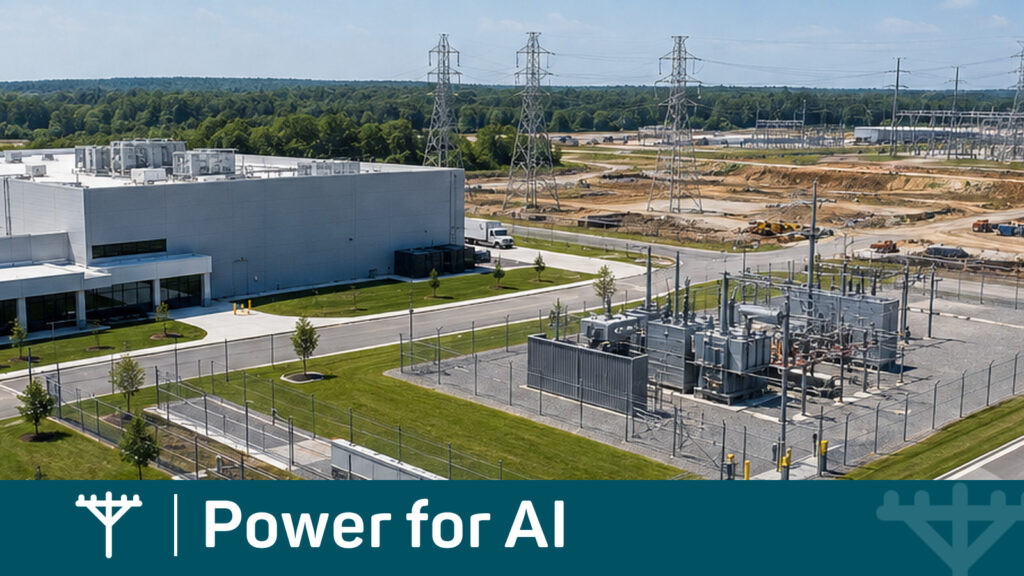
The same is true of the power source. A utility-led configuration, onsite generation, storage-assisted architecture or phased hybrid arrangement can change fault characteristics, protection assumptions, operating authority, maintenance procedures and control requirements. The decision is larger than the generation asset itself.
This is why technology lists are a weak way to describe an infrastructure architecture. A project does not operate as a list of components. It operates as a set of coupled physical and digital relationships.
One operating state is not enough
Many design conversations implicitly assume a final, steady-state facility. Real projects move through multiple states: initial commissioning, partial load, maintenance, expansion, equipment outage, utility transition and technology refresh.
A systems review should ask whether the disciplines remain compatible through those states. For example:
- Generation/source: What capacity is actually available in this state, and under what operating constraints?
- Distribution and conditioning: How is that power transformed, protected and delivered as load changes?
- Cooling: Can the thermal system support the actual density and partial-load behavior?
- Compute: Which workloads and rack configurations define the productive requirement?
- Communications: What information must move reliably for monitoring, coordination and operations?
- Cybersecurity: Which control paths, identities and operating authorities need protection as the architecture changes?
The value of the systems conversation is that a change in one answer immediately prompts the questions it creates elsewhere.
Optimization inside a silo can degrade the system
An engineering decision can look attractive locally and become costly globally. A conversion choice may improve one efficiency measure while increasing protection or integration complexity. Higher rack density may improve compute concentration while shifting requirements into cooling, distribution and serviceability. More telemetry may improve visibility while creating additional communications, data-governance and cybersecurity obligations.
This does not mean those choices are wrong. It means they should be evaluated against the operating objective rather than a single subsystem metric.
Our article Data Center Power Alternatives: A Decision Framework for AI Infrastructure makes the same point from the power side: alternatives are better evaluated as operating configurations than as a technology list.
Observability connects engineering to operations
A coordinated architecture also needs a common understanding of system state. Engineers may know how equipment should behave, but operators need enough trustworthy information to recognize how it is behaving now.
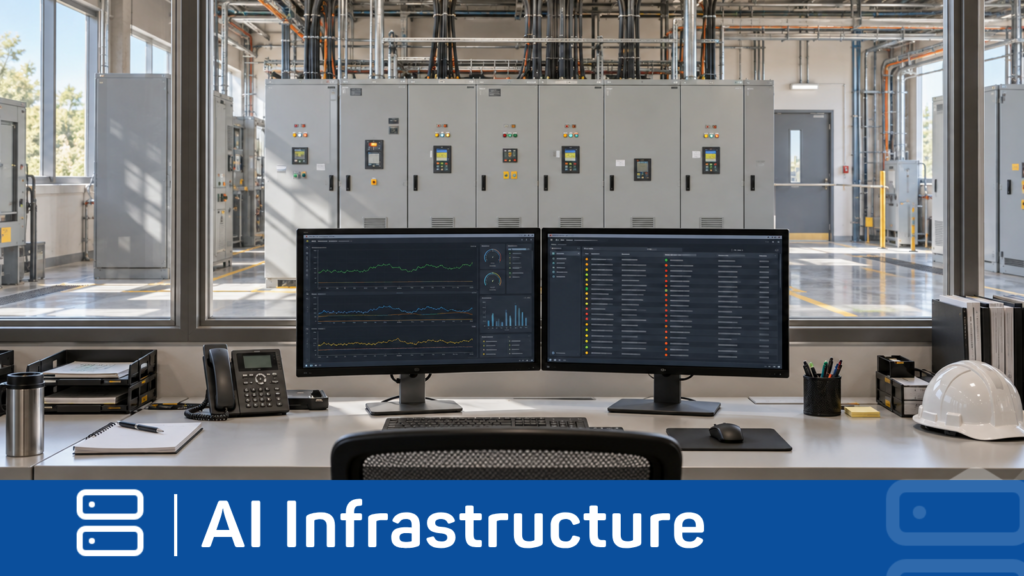
That makes observability a cross-disciplinary requirement. Electrical measurements, thermal conditions, equipment state, alarms, communications health and security events all contribute to operating decisions. More data is not automatically better; the important information is the information that changes an action.
As discussed in Observability Is the First Requirement for Defensible Power Operations, data availability and operational understanding are not the same thing.
The systems conversation should happen before equipment selection hardens
The best time to expose conflicting assumptions is before interfaces become expensive to change. A useful early review does not need to resolve every engineering detail. It needs to identify the decisions that are coupled.
Start with the operating requirement: what compute capacity must become productive, when, under which availability and expansion expectations? Then test the dependencies.
- Define the required operating states. Do not design only for the final build.
- Identify the interfaces that change across those states. Power, cooling, communications and control boundaries deserve explicit attention.
- Make assumptions visible. Rack density, source availability, redundancy, maintenance conditions and control authority should not remain implicit.
- Assign decision ownership. Cross-disciplinary does not mean ownerless.
- Preserve change paths. Where the future is uncertain, distinguish what must be fixed now from what can remain adaptable.
A practical test for the project team
Ask each discipline to name the three assumptions it is receiving from another discipline. Then ask whether those assumptions are documented, current and consistent with the intended operating state.
If the answers conflict, the problem is not that one specialist failed. The project has discovered an interface decision early enough to manage it.
That is the objective of a systems conversation: not eliminating specialization, but ensuring that specialist decisions combine into infrastructure that can actually become productive, remain operable and change deliberately.
The decision question: Which assumption made by one engineering discipline would create the largest downstream redesign if it turned out to be wrong?