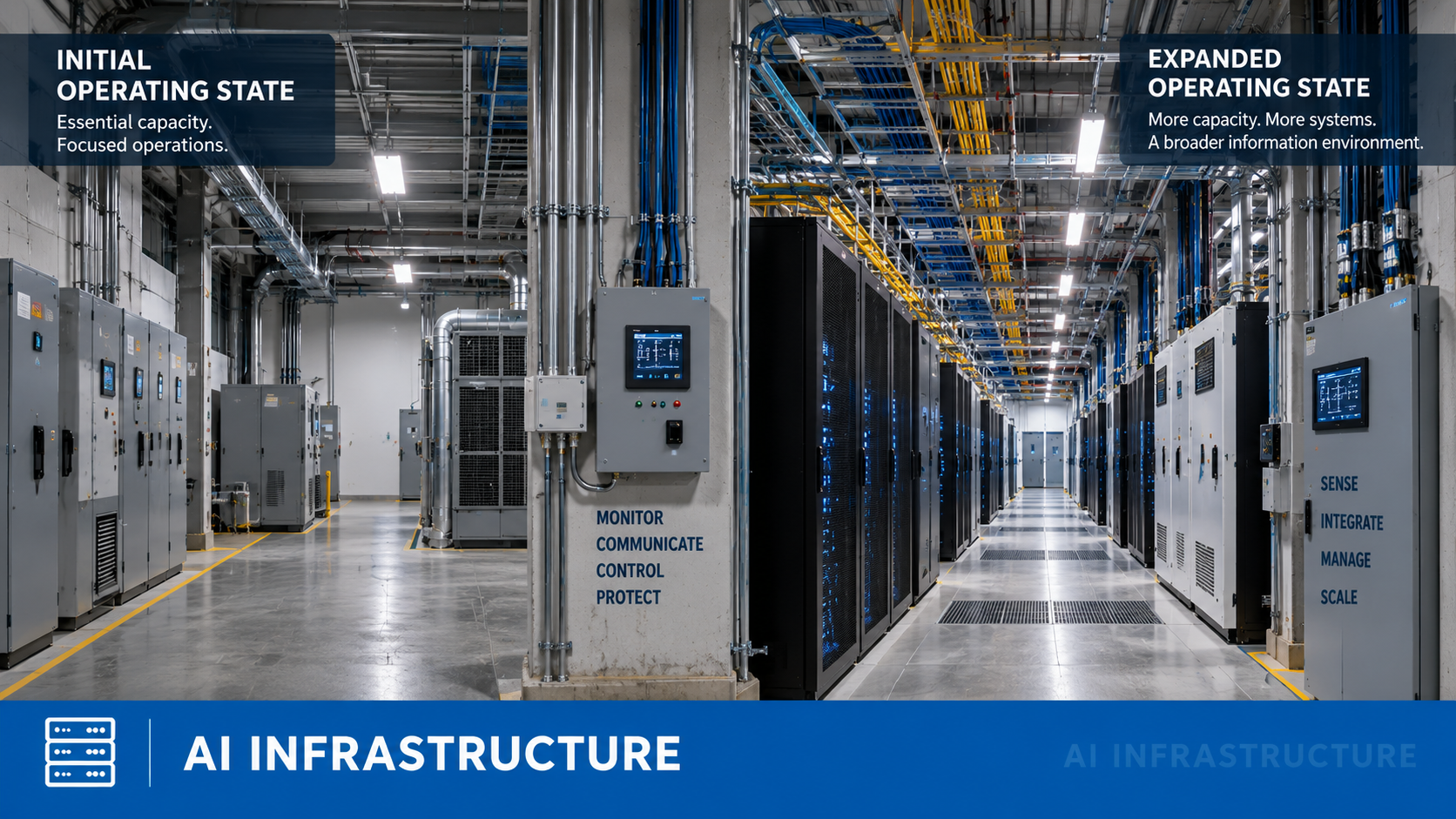
AI infrastructure rarely exists as one finished state. Utility capacity, generation, storage, distribution, cooling, compute, communications, and cybersecurity can all change as a facility moves from its first productive configuration toward a larger operating environment.
Every physical change creates a second requirement: the organization must still be able to understand and operate the physical system.
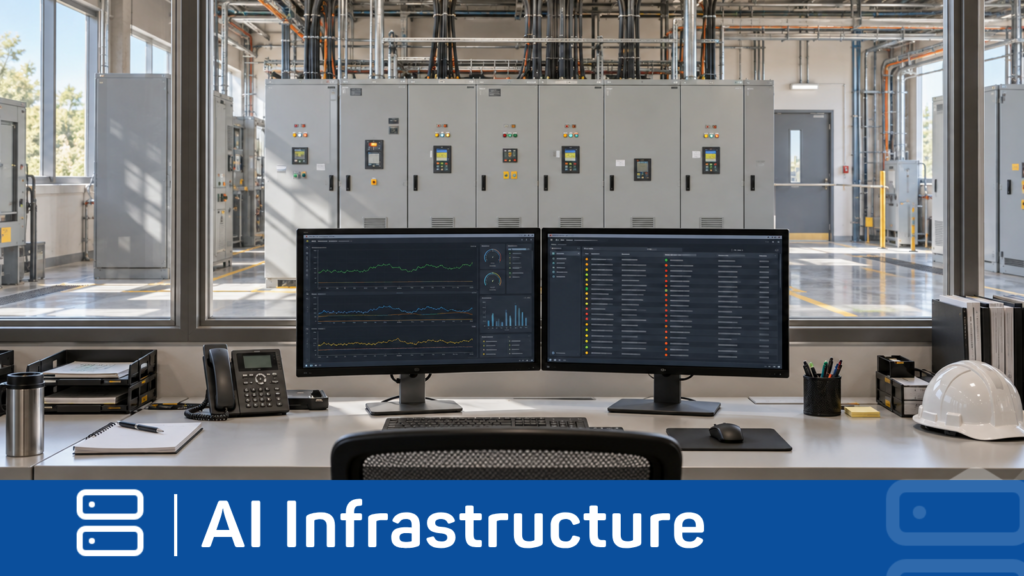
For this discussion, the control plane is not a particular product or proprietary architecture. It is the operational-information environment that allows teams to observe conditions, communicate status, coordinate decisions, identify abnormal behavior, and support human operators.
If the physical system evolves, that environment has to evolve with it.
Physical Change Creates Information Change
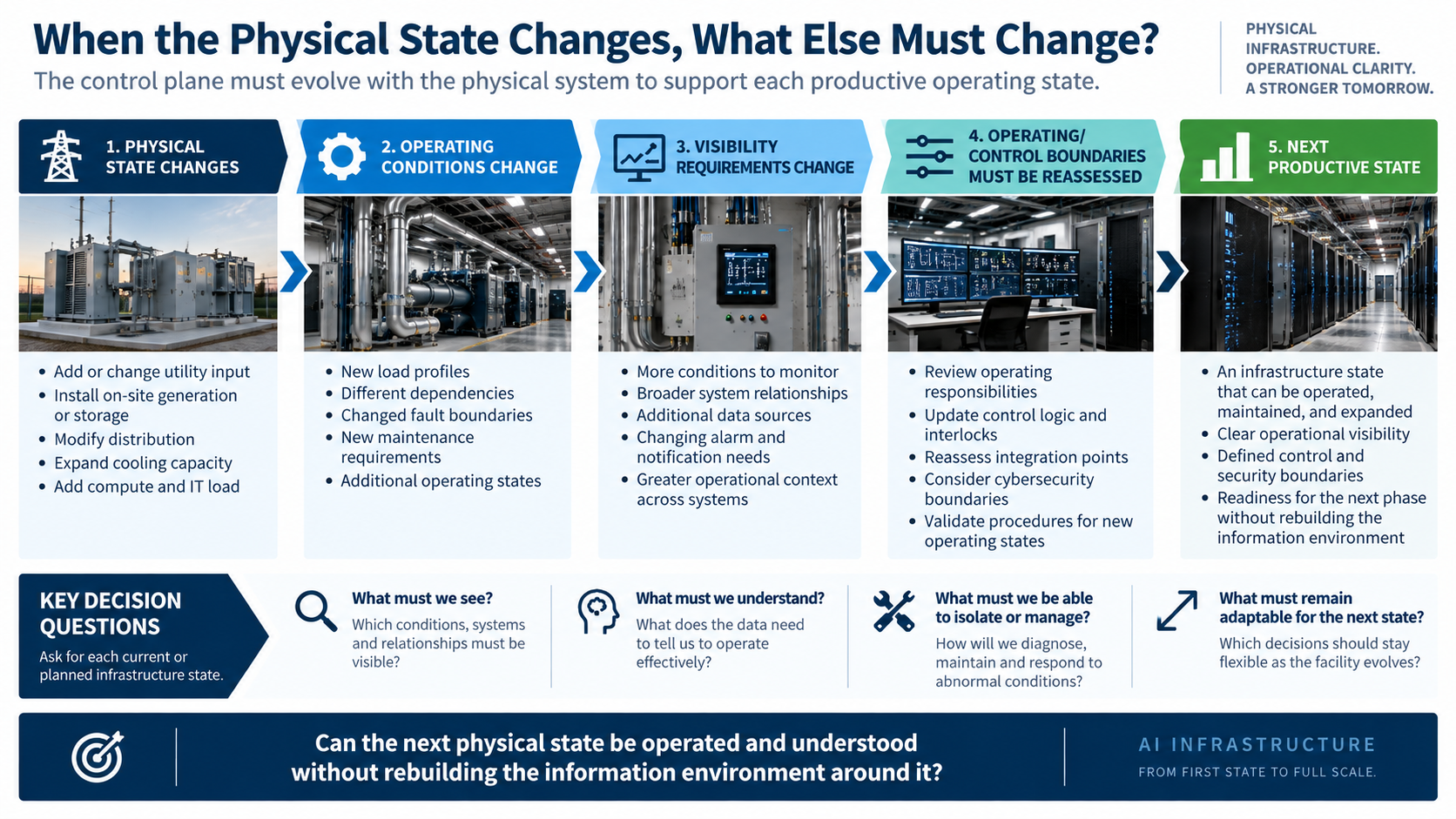
Add a power source, change distribution, expand cooling, or increase compute capacity and the project has changed more than equipment. It has also changed what operators need to see, where fault and maintenance boundaries exist, and which dependencies matter during normal and abnormal operation.
Those architecture questions eventually become questions about sensing, communications, monitoring, software, procedures, and controls. The mistake is assuming they can always be solved after the physical design has already been committed.
This is one reason to treat AI infrastructure as a coordinated operating system rather than a collection of independent subsystems. That broader systems view is discussed here.
Observability Is Part of Operating Readiness
Installed is not the same as operable. Energized is not the same as adequately understood.
As infrastructure becomes more interconnected, operating readiness depends partly on whether the team can see the conditions and relationships that matter. A fault in one area may affect another. Maintenance may change an operating boundary. A new source or load may create dependencies that were not present in the first state.
The goal is not maximum instrumentation. It is enough operational understanding to commission, operate, maintain, diagnose, and change the system responsibly.
The First Productive State Needs Its Own Operating Model
A phased project should not define its first viable state only by available megawatts or installed racks. It should also define what the operating team needs to understand about that state.
That includes the relevant boundaries, conditions requiring intervention, maintenance implications, diagnostic information, and the information needed to support the transition to the next phase.
This does not mean building the ultimate control environment on day one. It means deciding what the first productive state requires and which decisions should remain adaptable as the physical system grows.
The same principle applies when compute demand arrives before full utility buildout. The First Viable Megawatt examines why the first operating state must be productive, maintainable, and compatible with what follows.
Controls Should Follow the Operating Problem
A useful sequence begins with the operating problem rather than the technology.
What does the team need to know? Which conditions are important to safety, availability, maintenance, and the operating mission? Which relationships need to be visible during commissioning or fault response?
Only after those questions are clear should the discussion move toward sensing, communications, software, analytics, or controls.
Otherwise, a facility can accumulate abundant data without creating better system understanding.
Expansion Changes the Decision Boundary
The next phase is not simply more equipment. It can introduce new operating states, dependencies, interfaces, maintenance boundaries, and failure modes.
That creates two parallel design questions:
- Can the physical architecture accommodate the next credible state?
- Can the information environment understand and help the operating team manage that state?
The same systems principle appears in electrical architecture. For example, high-frequency conversion should be evaluated against the system constraint it is intended to solve, rather than treated as an isolated component decision.
Cybersecurity Belongs Inside the Same Conversation
Greater visibility and coordination can also expand the security boundary. That does not imply one cybersecurity architecture for every project. It does mean physical integration, operational visibility, communications, and security should be considered together rather than as unrelated workstreams.
As the physical system changes, teams should reassess which interfaces and operating responsibilities have changed and what that means for the information environment around them.
A Practical Decision Framework
For each current or planned infrastructure state, ask five questions:
- What is the operating state? Define the physical configuration the organization actually intends to run.
- What must be visible? Identify the conditions and relationships operators need to understand.
- What must the team diagnose, isolate, maintain, or change? Design around real operating work.
- What changes in the next state? Identify new dependencies, interfaces, responsibilities, and security boundaries.
- What should remain adaptable? Avoid unnecessarily locking the information environment to a physical state that is expected to change.
The objective is not the greatest possible amount of instrumentation or automation. It is sufficient operational understanding for the current state, with a credible path to the next one.
The Time-to-Function Implication
Power available is one milestone. Equipment installed is another. Productive compute requires an operable state in which the relevant infrastructure dependencies can be understood and managed.
That makes the control plane the operational counterpart to a changing physical system.
When teams plan communications, monitoring, controls, and security boundaries alongside the physical infrastructure, they are not adding a digital layer for its own sake. They are defining what it takes for each infrastructure state to function.
Continue Your Infrastructure Decision
Explore AI Infrastructure for the broader decision context, then use the Technical Library to investigate the technical questions behind it.