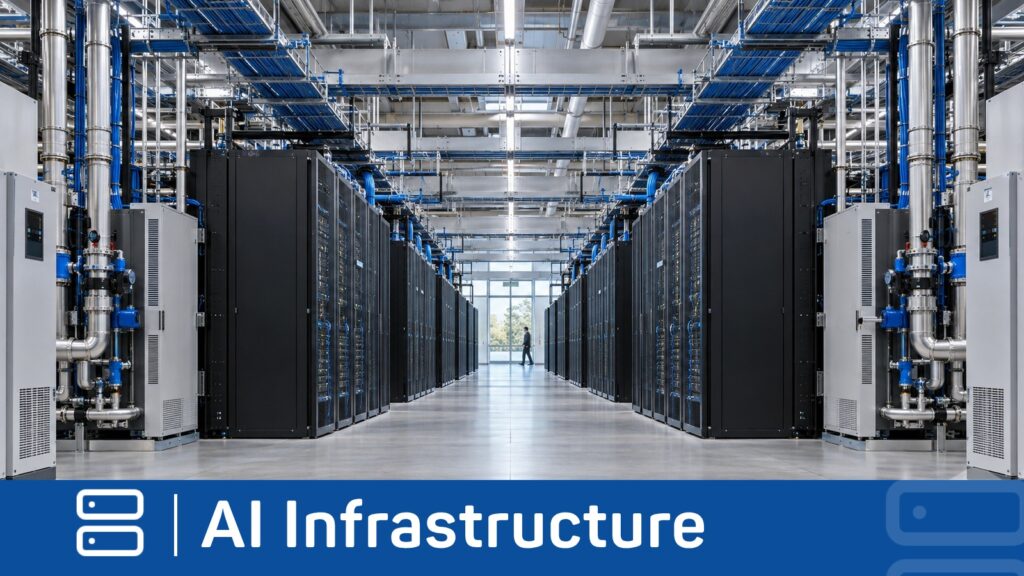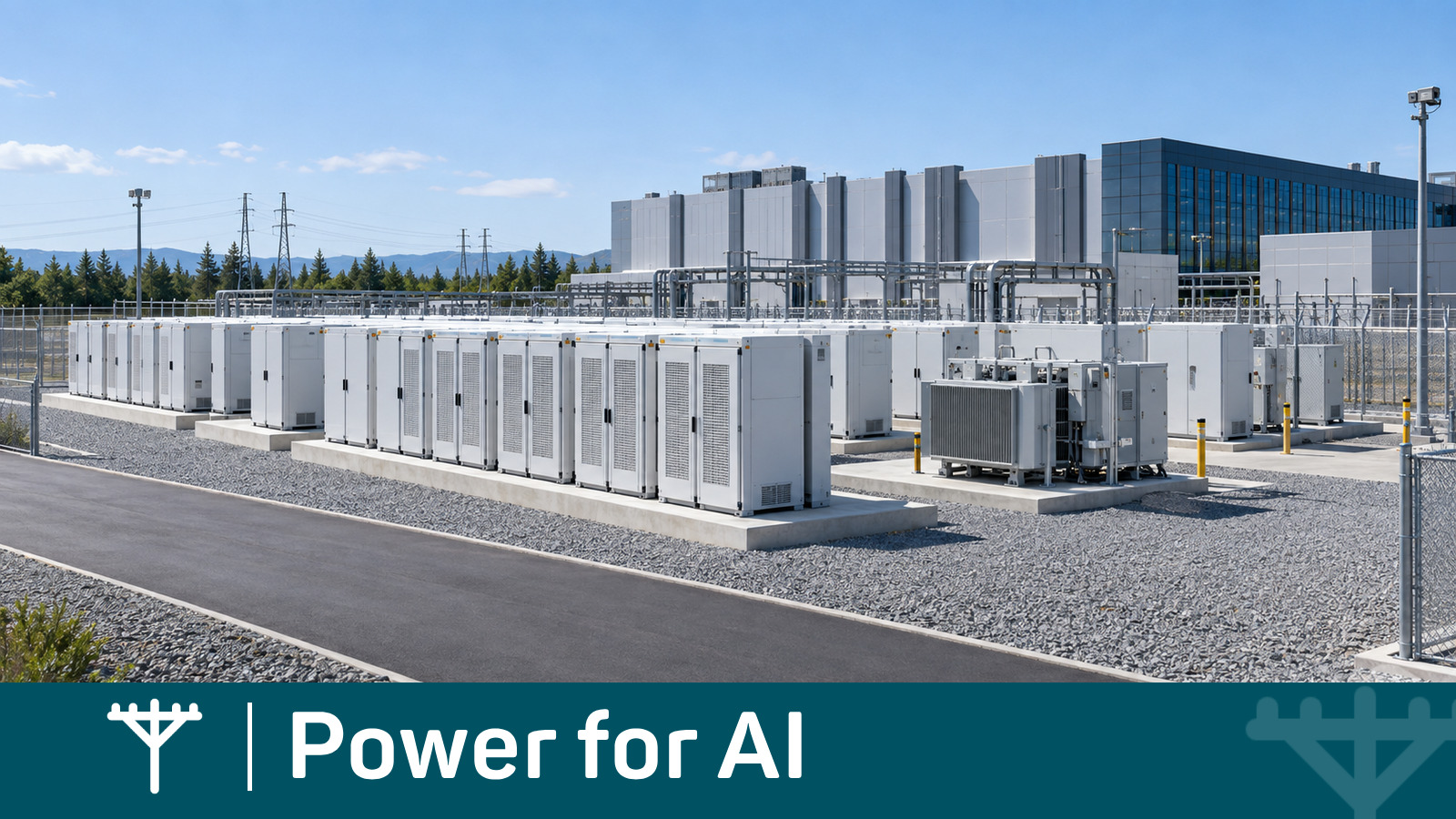
Energy storage has often been treated as a backup-resource decision. In AI-scale facilities, that framing is becoming too narrow.
Higher power densities and more volatile workload profiles place different demands on electrical systems: sharper changes in demand, tighter response requirements, and greater dependence on coordinated operation across supply, conversion, distribution, and controls. Storage therefore needs to be evaluated as part of the operating architecture, not as an isolated equipment category.
A comparative framework, not a predetermined answer
No single storage technology is right for every facility. A credible decision must account for performance, response time, safety, lifecycle cost, operational complexity, maintainability, footprint, and long-term reliability.
Lithium-ion batteries, compressed air, hydrogen, fuel cells, supercapacitors, flywheels, thermal storage, pumped hydro, superconducting magnetic energy storage, and hybrid systems all have strengths and limitations. The relevant question is not which technology is best in the abstract. It is how a technology performs under the actual operating conditions and objectives of a particular AI-scale facility.
Storage is part of a larger engineering system
Storage architecture interacts with grid conditions, on-site generation, conversion equipment, DC distribution, controls, and the load itself. A decision that looks sensible when measured only by installed capacity can be weak when response behavior, integration complexity, or operating risk are considered. In some cases, hybrid pairings of fast- and slow-response technologies can serve the operating need better than a single storage architecture.
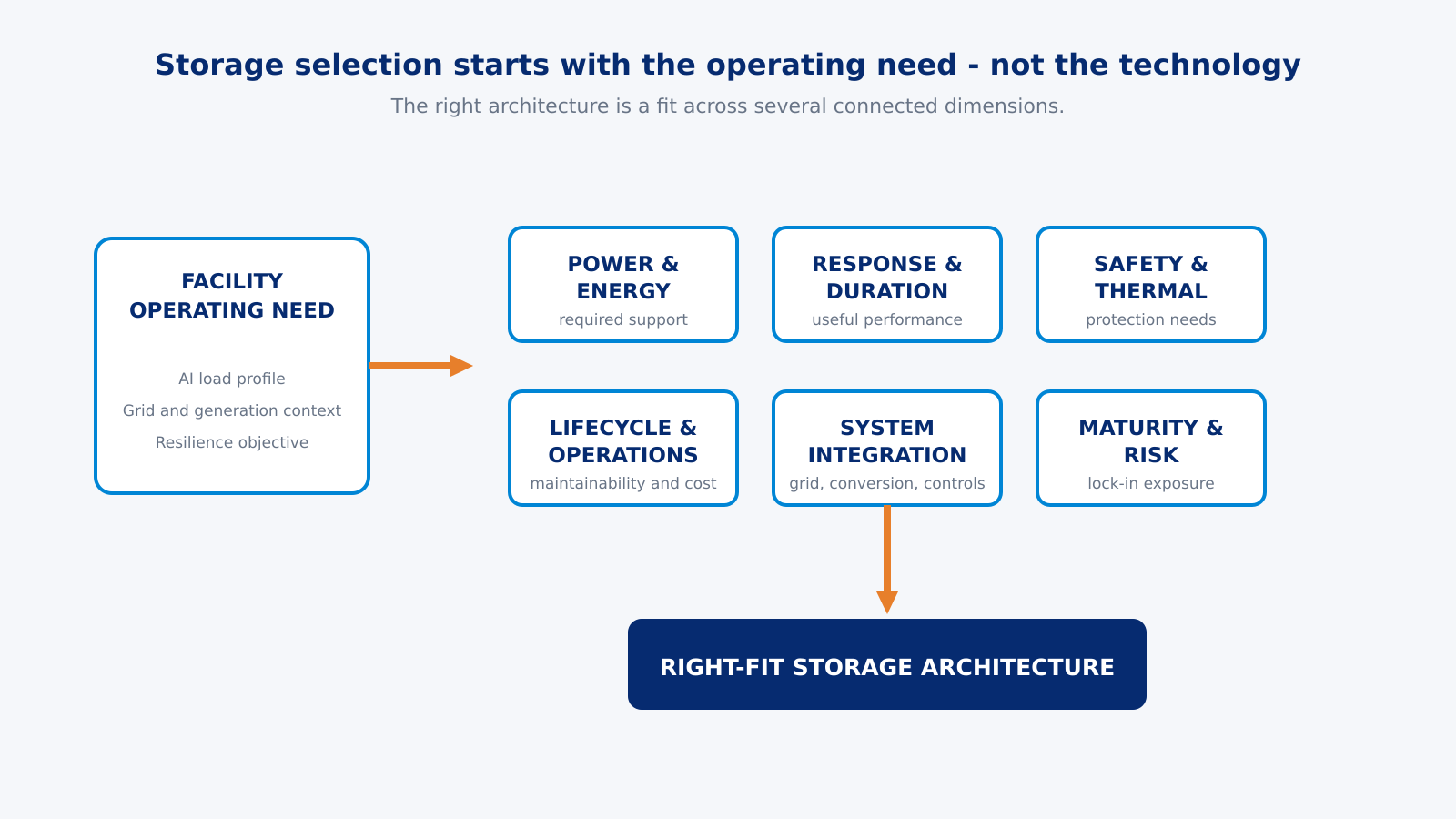
Engineers need a framework that helps them compare:
- Power and energy requirements under expected operating conditions
- Response speed and duration of useful support
- Safety, protection, and thermal-management requirements
- Lifecycle, operating-complexity, and long-term reliability implications
- Integration with generation, grid supply, conversion, and distribution
- Technology maturity and the risk of locking into a poorly matched architecture
Compare Storage Against the Operating Mission
A useful storage comparison starts with the operating conditions the facility must support. Compare response time, duration, safety, lifecycle cost, operational complexity, reliability, and integration with generation, conversion, and distribution. Define the questions that must be resolved before a storage choice becomes embedded in the larger infrastructure design.
Continue Your Infrastructure Decision
Explore Power for AI for the broader decision context, then use the Technical Library to investigate the technical questions behind it.