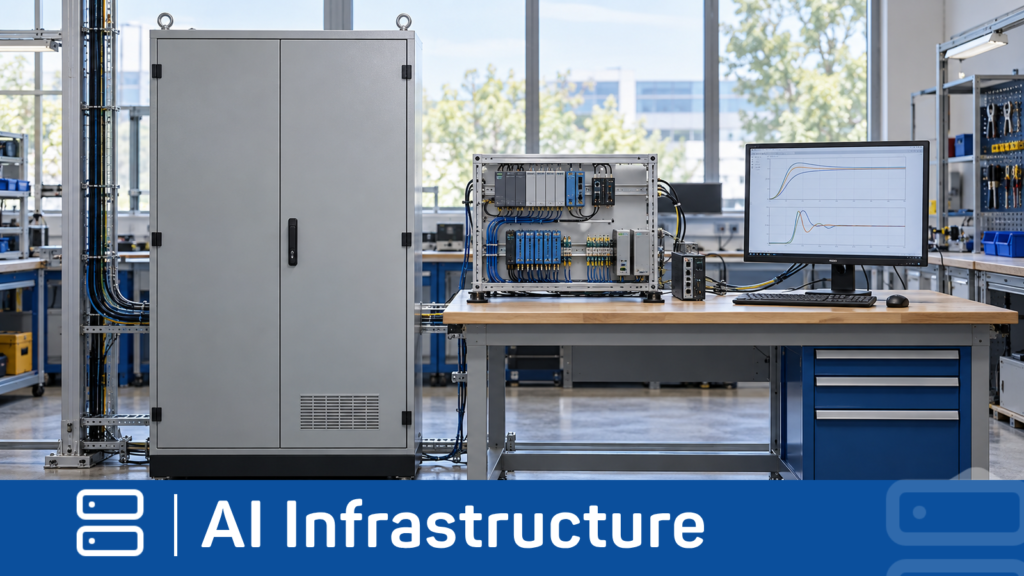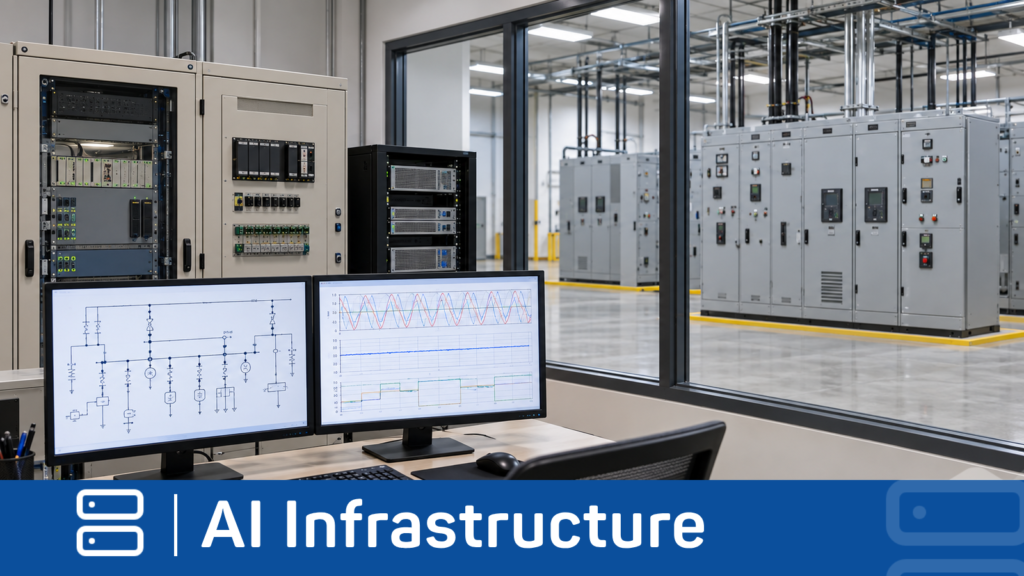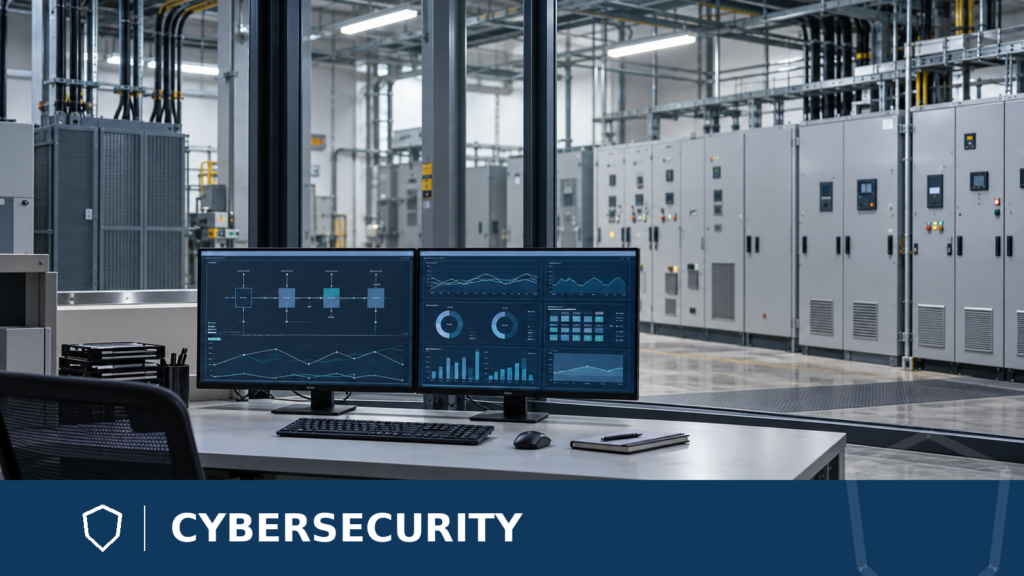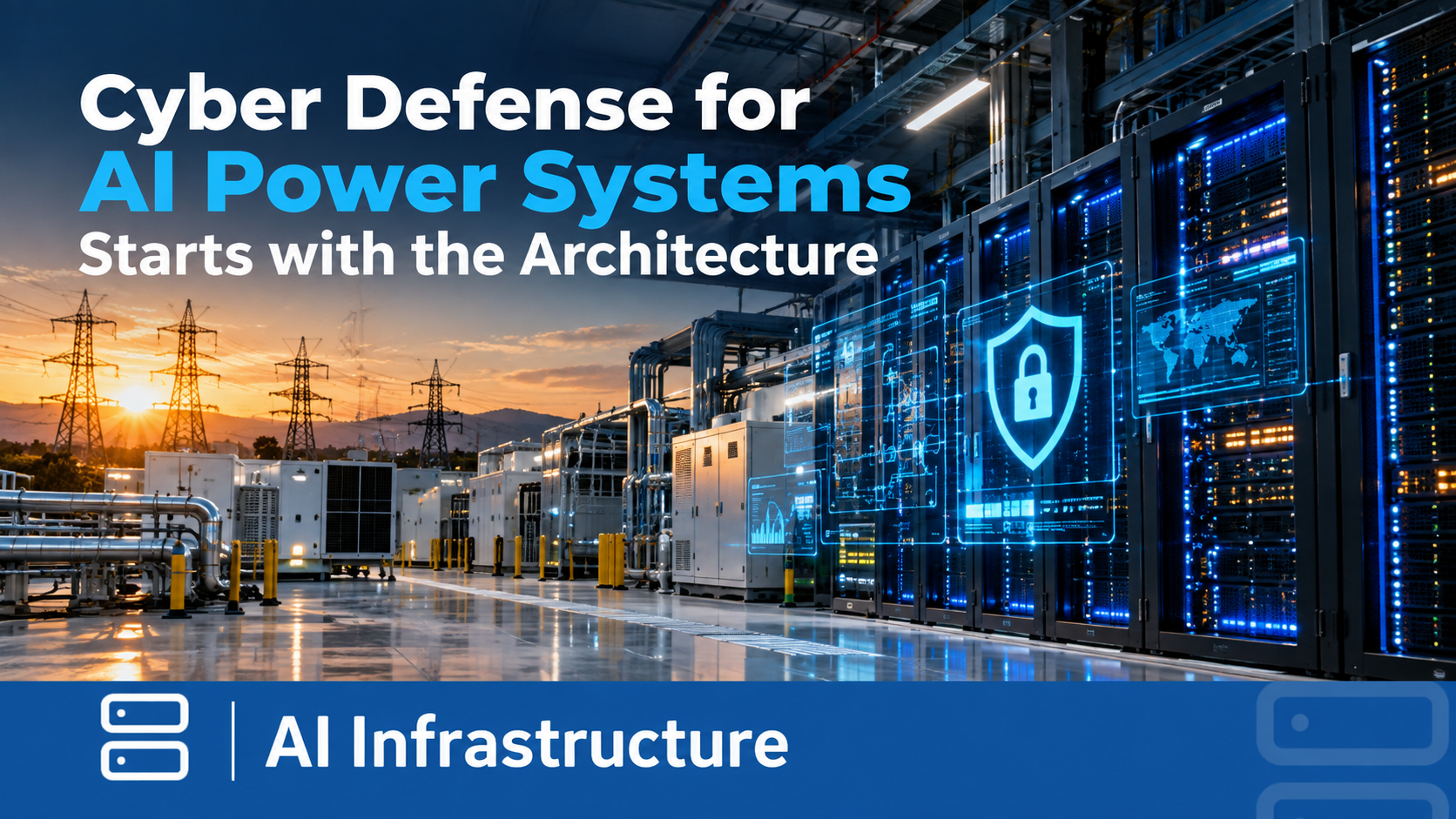
AI infrastructure is becoming more interconnected at exactly the point where reliability matters most.
Onsite generation, battery energy storage, microgrid controllers, power monitoring and facility-control systems increasingly operate as parts of one coordinated power environment. The result is greater operational capability—but also a different cybersecurity problem.
The question is no longer simply whether the enterprise network is secure.
The question is whether the power system can continue operating safely and predictably when the operational-technology environment is challenged.
The attack surface now includes the power architecture
Traditional data-center cybersecurity discussions tend to begin with servers, networks, applications and data. Those remain essential. But an AI facility with coordinated power resources also depends on operational technology controlling physical infrastructure.
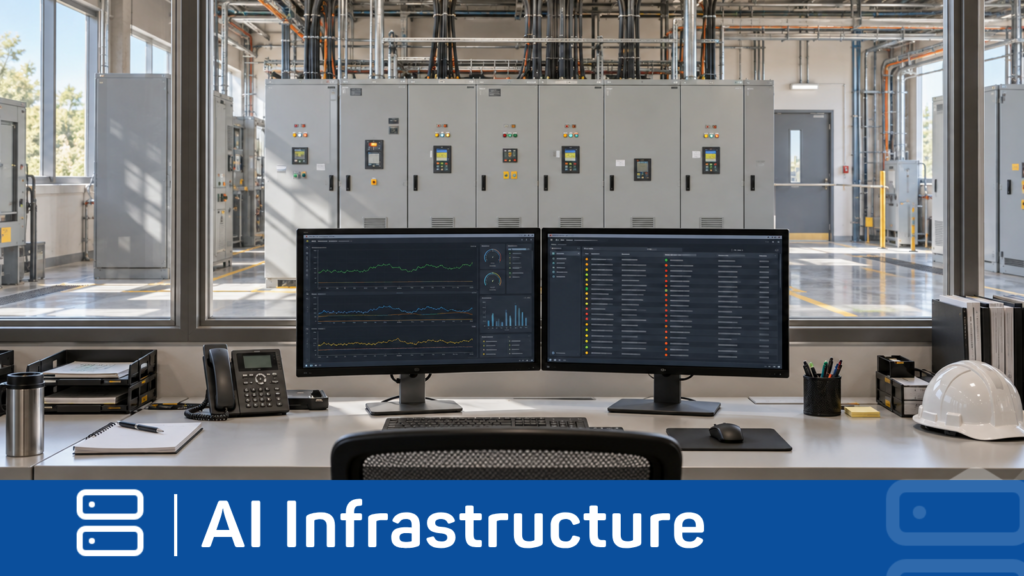
SCADA systems, microgrid controllers and industrial protocols such as DNP3 and Modbus can influence how generation, storage and electrical loads interact.
That creates an important distinction.
A compromise of conventional information technology may threaten information or computing resources. A compromise involving operational technology can potentially affect the behavior of the physical power system itself.
Cybersecurity therefore becomes part of infrastructure resilience—not simply information security.
That broader relationship between controls and physical infrastructure also appears in The Infrastructure Control Plane Must Evolve with the Physical System.
Detection answers only the first question
A conventional defensive response is straightforward: detect unauthorized activity and block it.
That can be necessary. But detection and blocking alone do not necessarily explain what the intruder intended to do, what operating behavior they were attempting to manipulate, or which weaknesses they discovered along the way.
Those questions matter because infrastructure operators need more than an alert. They need information that can improve the system after an attempted intrusion.
One approach being examined for operational-technology environments is cyber deception using a digital twin.
Instead of allowing a suspicious session to continue interacting with the actual power-control environment, the session can be redirected into an isolated representation of that environment.
The objective is not simply to stop activity. It is to learn from it without exposing the operating system itself.
A useful digital twin has to behave like a power system
This is where the problem becomes an engineering problem rather than merely a cybersecurity exercise.
A convincing representation of a power environment cannot simply display realistic-looking screens. Its behavior must remain credible as someone interacts with it.
That means representing operating conditions in ways that remain consistent with the underlying physics of the system.
Historical operating information can help establish realistic conditions. Power-system models can then calculate plausible consequences as commands and operating states change.
The distinction matters.
A digital twin that behaves unrealistically may reveal itself quickly. A physics-consistent environment provides a more useful setting for observing behavior while keeping the actual operating infrastructure isolated.
For a deeper treatment of the design conditions behind this approach, see Digital Twins for OT Cyber Defense: What Must Be True Before They Help.
Turn attempted behavior into better defenses
The larger opportunity is what happens after the interaction.
Observed behavior can be classified and analyzed to identify what an adversary attempted to access, manipulate or learn. Frameworks such as MITRE ATT&CK for industrial-control environments provide a way to organize those behaviors.
That information can then inform hardening decisions.
The cycle becomes:
Detect → Isolate → Observe → Understand → Harden
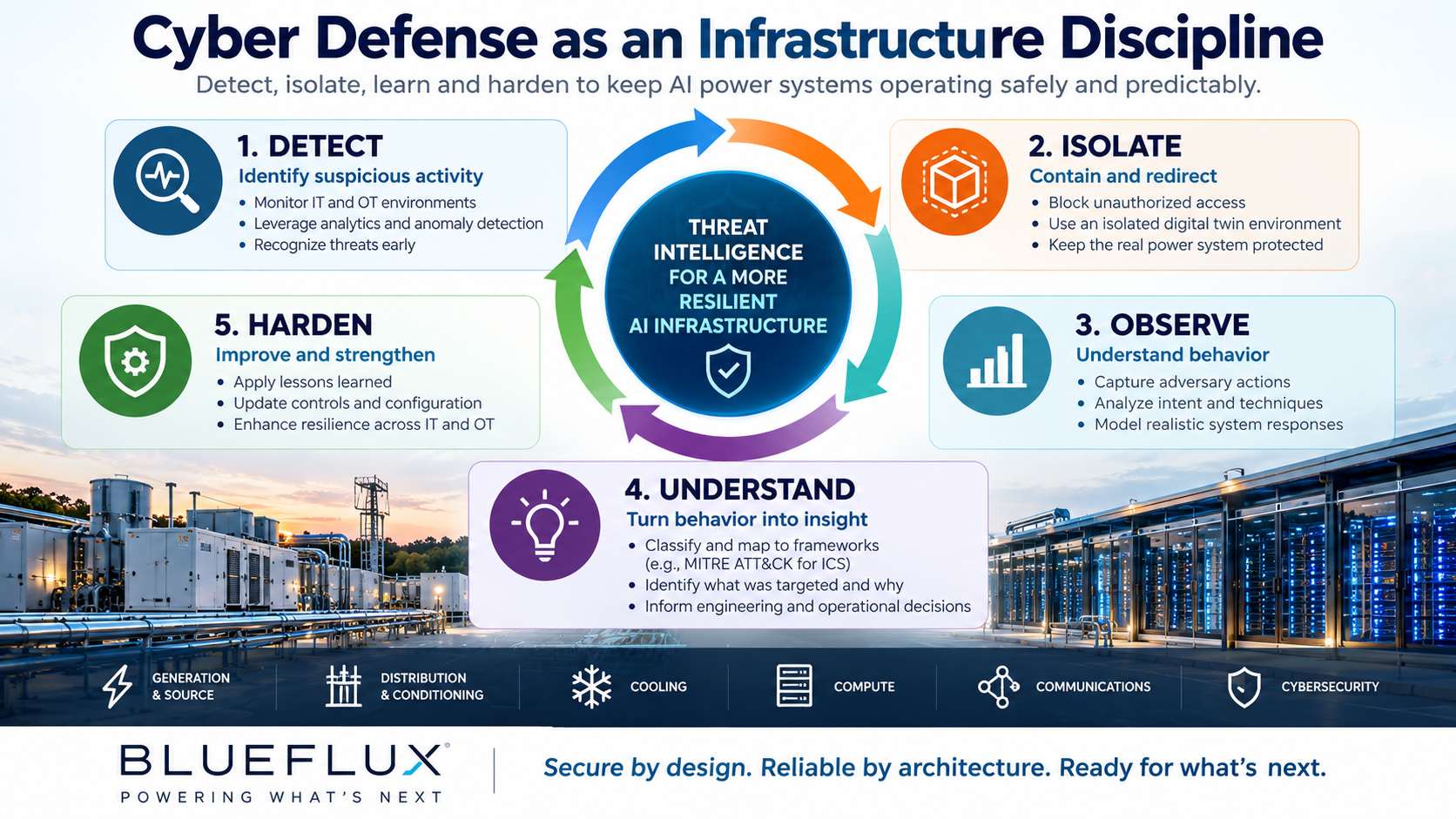
This changes the role of cyber defense. Instead of treating every attempted intrusion only as something to eliminate, the architecture can potentially turn hostile behavior into information that improves future resilience.
Cybersecurity decisions belong earlier in infrastructure design
The broader lesson for AI infrastructure is not that every facility needs the same digital-twin or deception architecture.
It is that cyber defense should be considered while the power and control architecture is being designed—not after those systems have already been integrated.
Generation architecture affects controls. Storage affects controls. Power distribution affects monitoring. Communications connect those systems. Cybersecurity determines how those connections can be trusted, isolated and defended.
Those decisions are interconnected.
For executives and technical teams evaluating new AI infrastructure, a useful question therefore comes before selecting any particular cybersecurity technology:
If someone gained unauthorized access to the operational-technology environment, how would the infrastructure detect it, contain it, learn from it and continue operating safely?
The answer belongs in the infrastructure architecture itself.