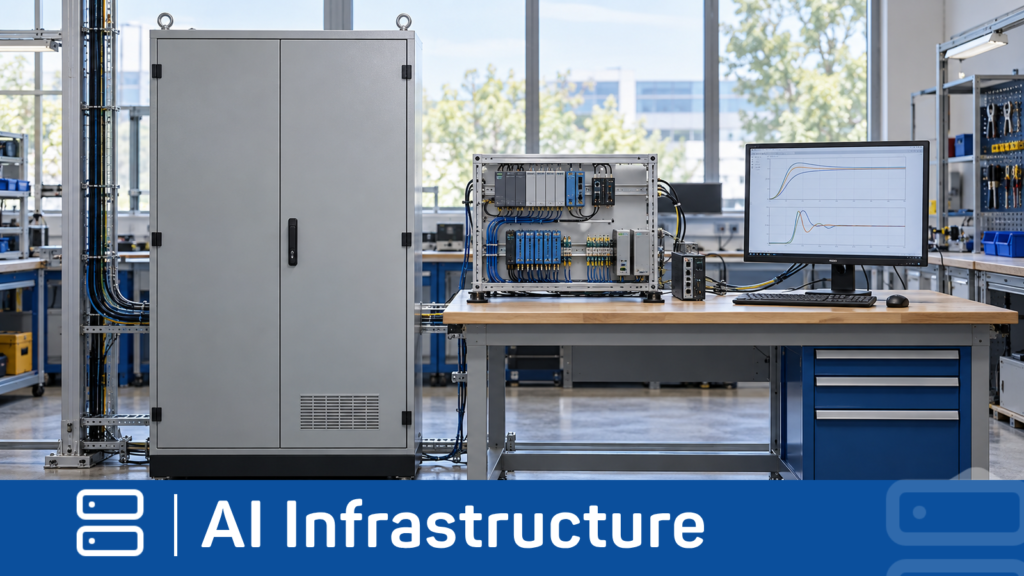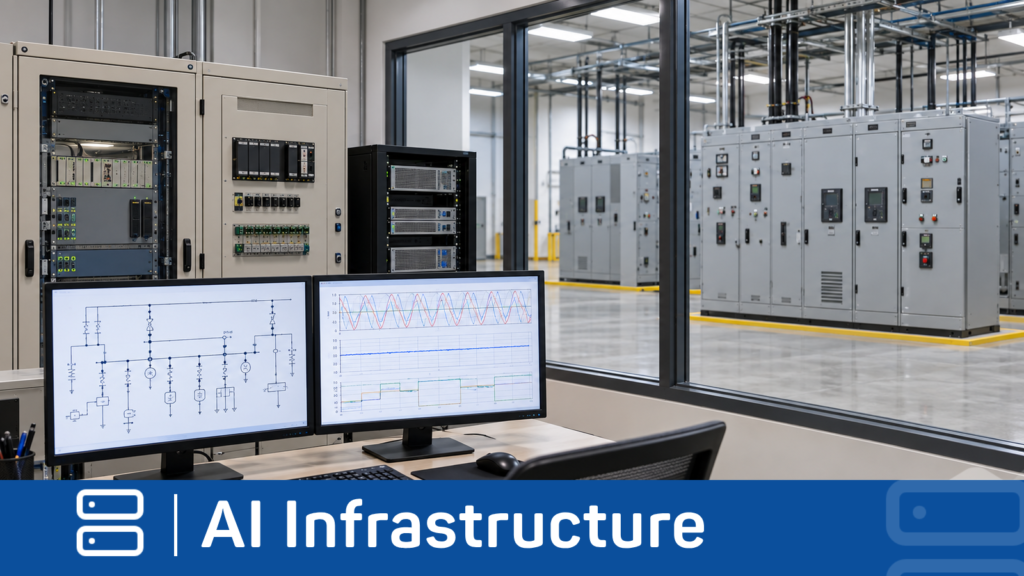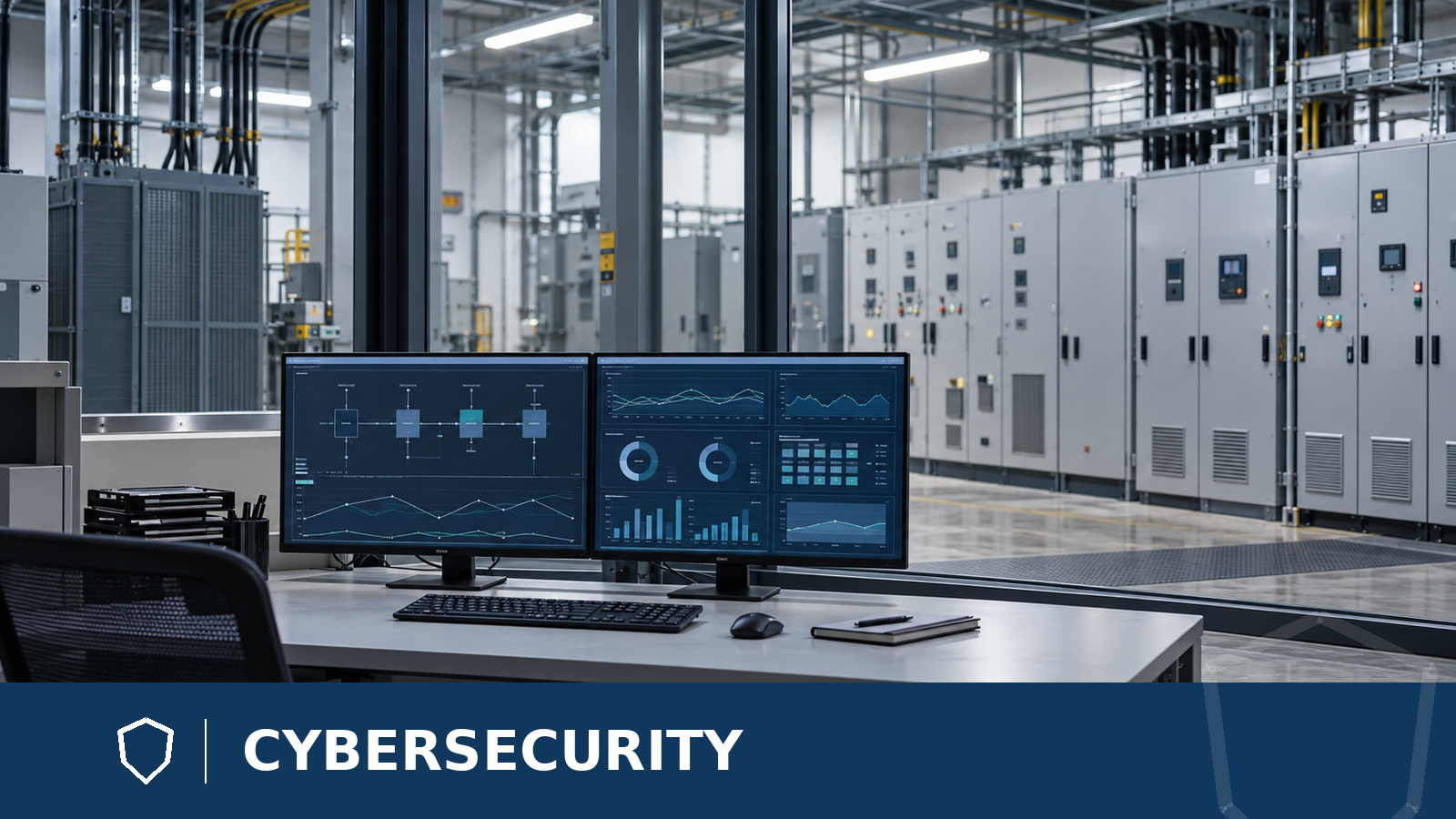
A model of a power system can offer a place to study behavior, but its usefulness depends on representation, separation, governance, and a credible response path.
A connected power system has more than a network boundary. It has an operating boundary: who can observe equipment, change a setting, issue a command, and restore a known state after something goes wrong. The preceding discussion of OT security introduced those questions. A digital twin raises a narrower one. Can a representative model help a security team understand suspicious behavior without confusing a simulation with the system it is charged with protecting?
The answer depends on what the model represents, how it is separated from production, and who is authorized to act on what it shows. A visually convincing display is not evidence that the model is fit for a defensive decision. Nor does adding a model replace asset inventory, access control, monitoring, response planning, and practiced recovery.
Start with the decision the model is meant to support
The phrase digital twin can describe very different things, from a static equipment map to a model that reflects changing system behavior. Before choosing a tool, define the defensive question. Does the team need to understand the consequence of a proposed action? Examine a sequence of unusual commands? Compare observed behavior with an expected operating state? Train responders without touching production? Each job has a different standard of evidence.
This distinction matters because a model can be useful for one task and unreliable for another. A representation that supports a tabletop exercise may not be detailed or current enough to inform an operating decision during an incident. The team should state the intended use, the assumptions behind it, and the conditions under which an operator must disregard its output.
Representation has a cost and a limit
Power systems change. Equipment configurations, software versions, dispatch priorities, maintenance states, and communications paths can all shift after a model is built. The closer a defensive use case gets to real operating consequences, the more the team must ask how the representation is validated and kept current.
That does not require a claim that every physical detail can be reproduced. It requires a candid account of what matters for the chosen question. A model may capture a relevant relationship among source power, storage, controls, and load while omitting other behavior. Operators need to know the boundary of that representation. Otherwise, precision on a screen may be mistaken for confidence in the real facility. This is another example of why AI infrastructure must be treated as a coordinated operating system, not as isolated equipment.
Separation and authority must be explicit
A defensive model is only helpful if the organization can explain the relationship between the model environment and the production power system. Which information enters the model? Which people and services can reach each environment? Can a test action affect equipment, operators, or records used for live decisions? These questions belong in design, commissioning, and change control, not only in a cyber-tool review.
A second boundary concerns authority. Model output may inform an analyst, but who decides whether to isolate access, change an operating mode, preserve evidence, or recover a configuration? Those choices can affect reliability and safety. The security team, power engineers, and facility operators need an agreed decision path before the pressure of an incident.
Judge the evidence and operating burden together
A team evaluating digital-twin cyber defense should test more than a demonstration scenario. It should ask how the model is checked against actual behavior, how stale inputs are identified, how false conclusions are handled, and how findings reach the people responsible for the live system. It should also account for the continuing work: maintaining a useful model, reviewing access, training operators, and revising procedures when the facility changes.
Conventional safeguards still matter. Logging, segmentation, managed remote access, rehearsed incident response, and recovery procedures establish the foundation on which an additional defensive method can be judged. If that foundation is weak, a sophisticated model may add another interface without resolving the operating problem.
A practical decision test
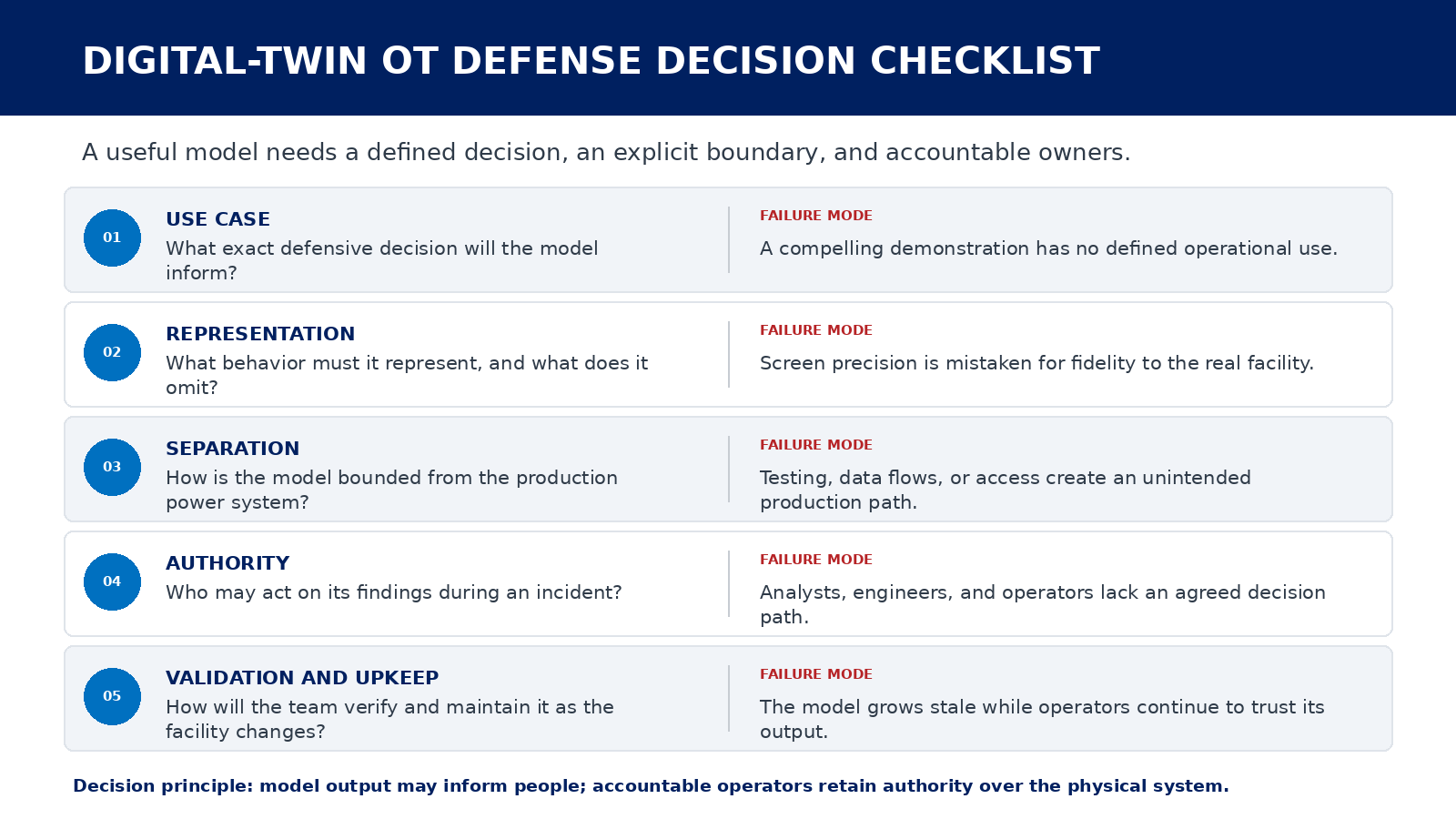
Before a project treats a digital twin as part of its cyber-defense approach, it should be able to answer five questions. What exact decision will the model inform? What operating behavior must it represent, and what does it omit? How is the model bounded from production? Who may act on its findings? How will the team validate and maintain it over time? The answers may lead to a useful application, a narrower pilot, or a decision to strengthen basic OT controls first.
These are design and governance questions, not a promise of protection. A good security architecture makes uncertainty visible and keeps accountable people in control of the physical system.
Continue Your Infrastructure Decision
Explore AI Infrastructure for the broader decision context, then use the Technical Library to investigate the technical questions behind it.