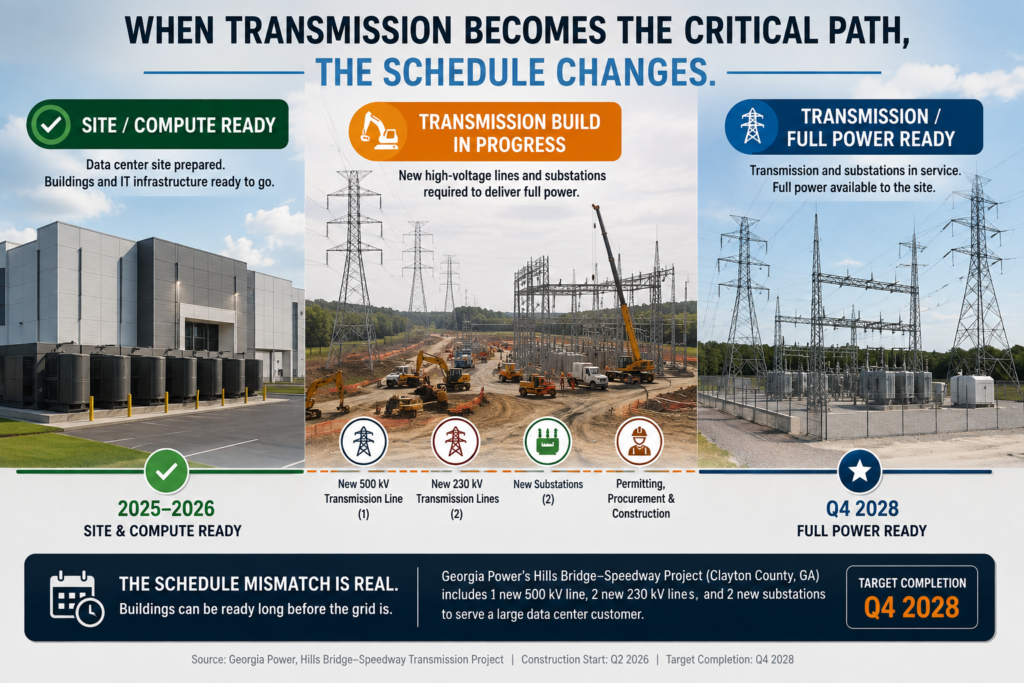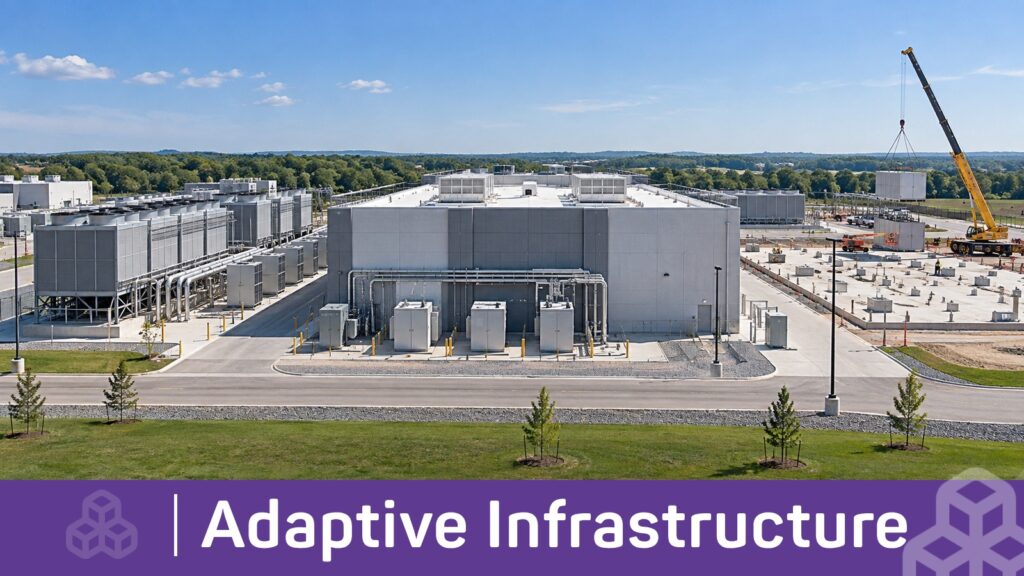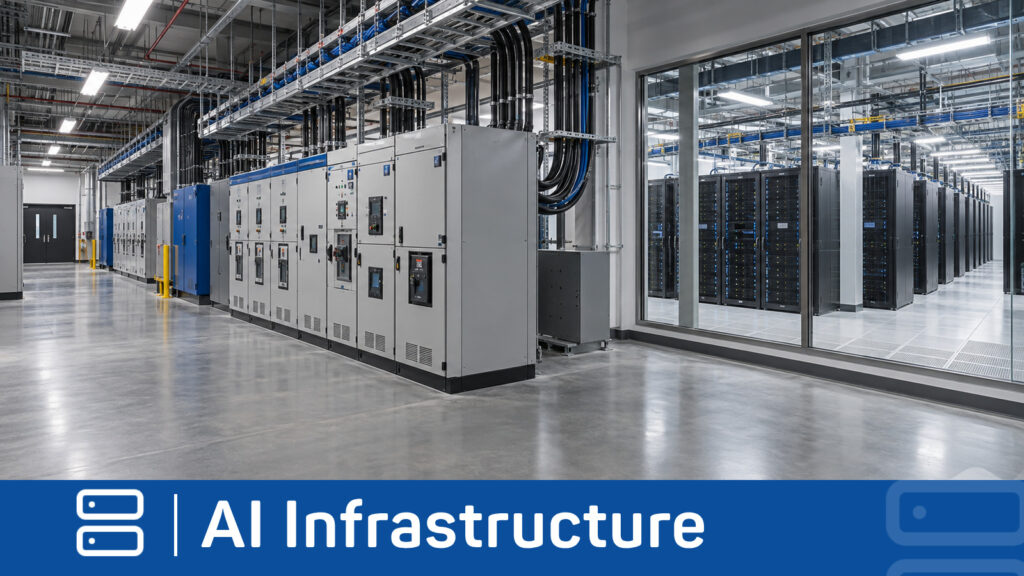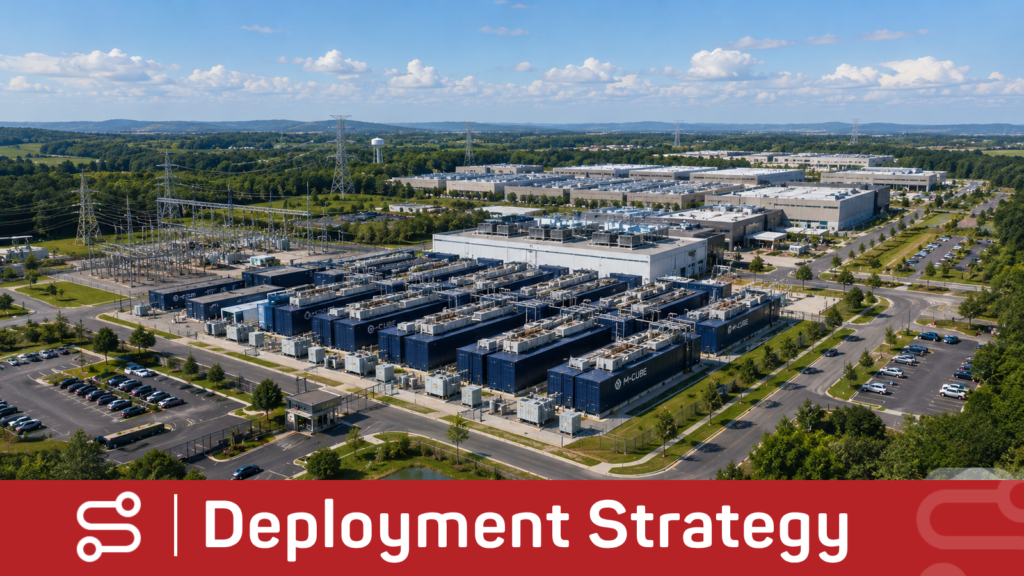
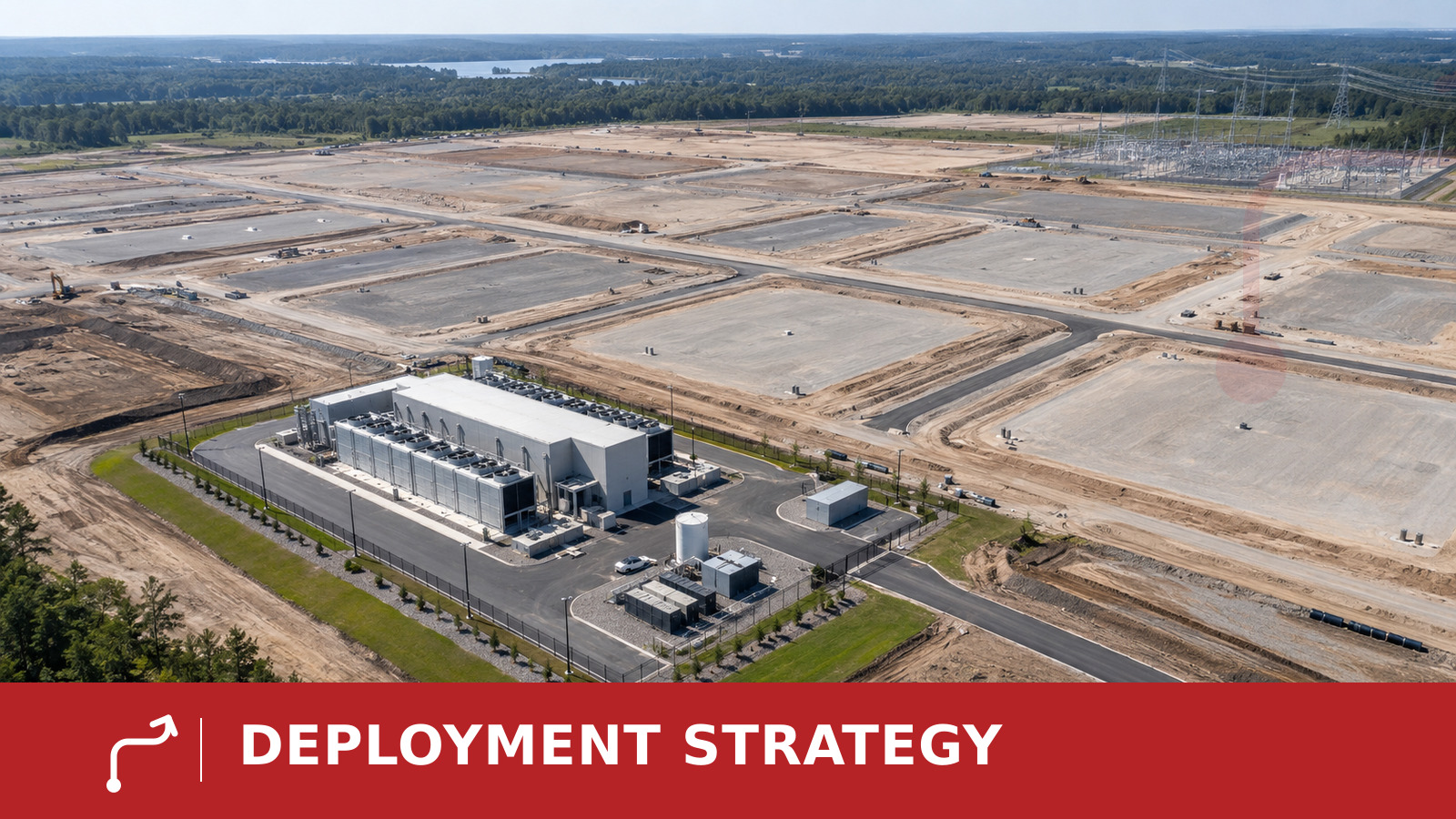
Modular construction can shorten the time required to fabricate and assemble portions of a data center. That is useful. But a shorter construction schedule is not the same as an earlier date for productive AI compute. A facility can be ready before its power connection, cooling system, fiber route, operating staff, or commissioning requirements are ready.
For a developer evaluating a new AI infrastructure project, the first question should therefore not be, “How fast can we deliver the building?” It should be, “What is actually preventing a defined workload from entering reliable service?” Prefabrication is a possible response to that question, not a substitute for answering it.
Modularity solves a real problem, but only one part of the schedule
Factory-built power, cooling, and compute enclosures can move work off-site, simplify repeatable installation, and reduce field-construction uncertainty. Those advantages are strongest when designs are sufficiently standardized, transport and site access are practical, interfaces have been engineered, and downstream connections are available when modules arrive.
The limits are just as important. Modular construction cannot manufacture a utility service commitment. It cannot remove permitting obligations, create an available fiber path, eliminate commissioning, or make an incompatible workload suitable for a particular power and cooling arrangement. If any of those items governs the in-service date, the project may finish its physical assembly earlier without bringing revenue-producing capacity online any earlier.
This distinction is not merely theoretical. Research on large-load interconnection identifies utility processes, grid upgrades, and coordination as substantial elements of data center development. It also discusses phased energization and other approaches that require analysis of site-specific conditions. Such strategies are options to evaluate, not automatic entitlements or substitutes for utility and regulatory approval.
Three clocks govern the deployment decision
1. The building clock
This covers design, procurement, manufacturing, civil work, installation, and mechanical and electrical completion. Prefabrication can improve parts of this clock, particularly where repeatability allows off-site production to run alongside site preparation.
2. The infrastructure clock
This covers available electrical capacity, substations and feeders, equipment lead times, network access, cooling water or heat-rejection requirements, protection and control systems, and site-specific approvals. These dependencies often involve utilities, jurisdictions, and third parties that the modular supplier does not control.
3. The productive-compute clock
This begins when a defined workload can operate within an accepted service boundary: power quality and resilience, thermal performance, connectivity, security, monitoring, staffing, and operational responsibility. Mechanical completion does not automatically establish this state.
The economically relevant date is not always the building completion date. It is the date when the intended customer workload can be operated responsibly. The difference should be visible in both project schedules and investment decisions.
Find the constraint before choosing the construction method
Consider two hypothetical projects. The first has a power agreement, site approvals, network access, and a clear operating requirement, but traditional construction is on the critical path. Modular construction may materially accelerate that project.
The second has an early-completion building package but cannot obtain adequate utility service until much later. Accelerating fabrication may leave expensive equipment idle, unless a separately validated initial operating state is possible. In that case the useful strategy is to evaluate phased service, workload allocation, and a credible transition path – with modular construction potentially serving as one implementation method.
That second distinction is important: a smaller first phase must still be functional. It needs sufficient dependable power, appropriate cooling and communications, protection coordination, cybersecurity, maintenance access, and a plan for growth. An interim configuration that cannot transition economically to the intended future site may merely exchange schedule risk for stranded-asset risk.
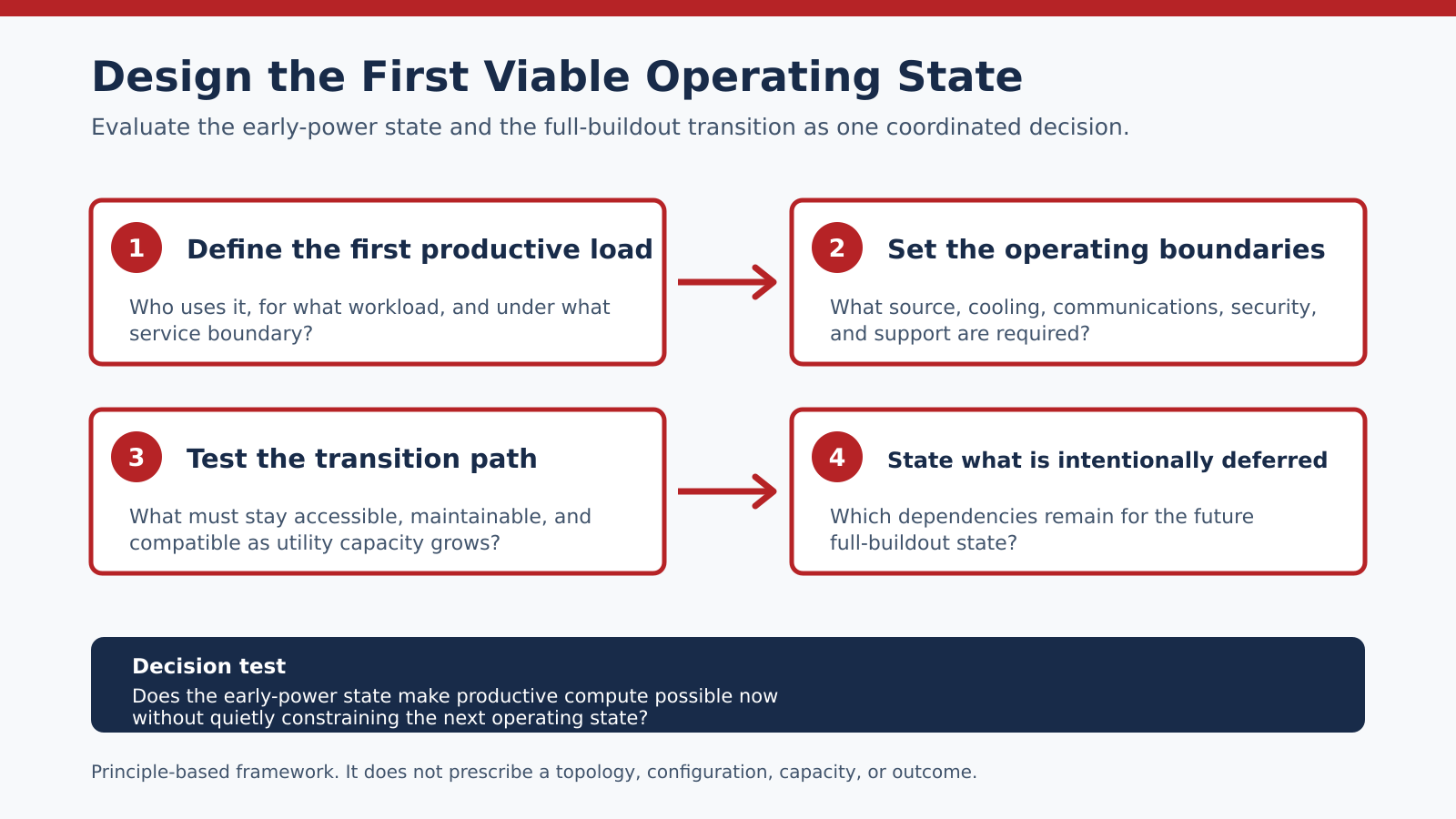
A practical test for developers
Before signing a prefabrication or conventional construction package, ask the project team to reconcile five questions:
- Workload: What specific compute service will operate first, with what power, thermal, network, uptime, and security requirements?
- Dependency: Which dated commitment truly controls the first productive operating state: site, service, equipment, construction, or commissioning?
- Control: Which constraints can the development team shorten directly, and which require a utility, authority, supplier, or customer decision?
- Transition: Can the initial configuration expand without avoidable demolition, stranded equipment, or a loss of operating reliability?
- Economics: Does the earlier productive date justify the cost, complexity, integration risk, and any limitations of the interim configuration?
If construction is the constraint, modularization deserves serious consideration. If power or another infrastructure dependency is the constraint, shortening fabrication alone is not a convincing deployment strategy. Sometimes conventional construction remains the more rational answer, especially where the design is highly site-specific, transport limits are severe, or off-site fabrication creates more interface complexity than it removes.
The decision is time to function, not speed to installation
The objective is not to maximize prefabrication. It is to minimize the time and risk required to put useful compute into a safe, operable, and expandable state. The right construction method follows from that decision.
For a related decision framework, see The First Viable Megawatt and explore the Deployment Strategy insights hub.