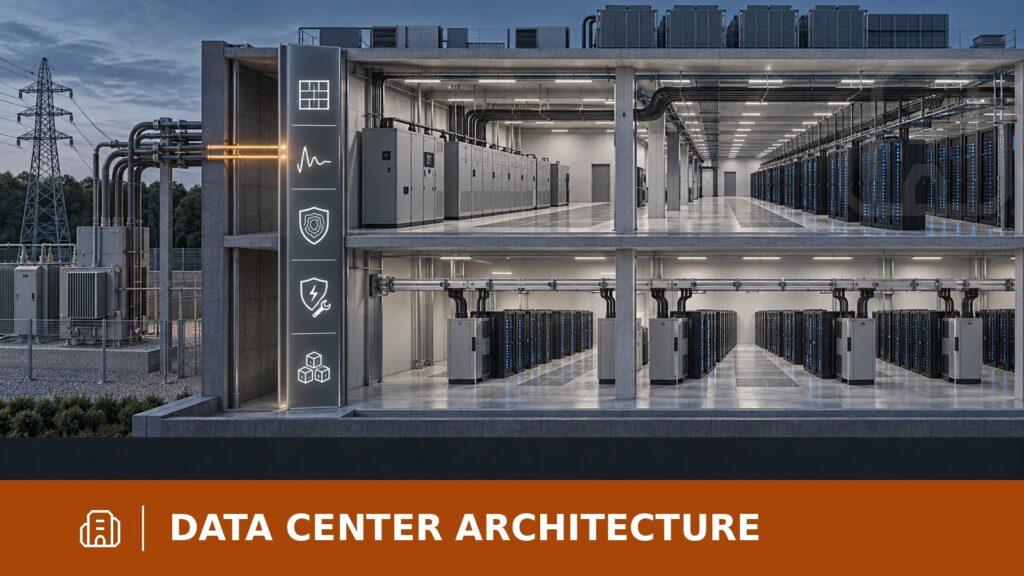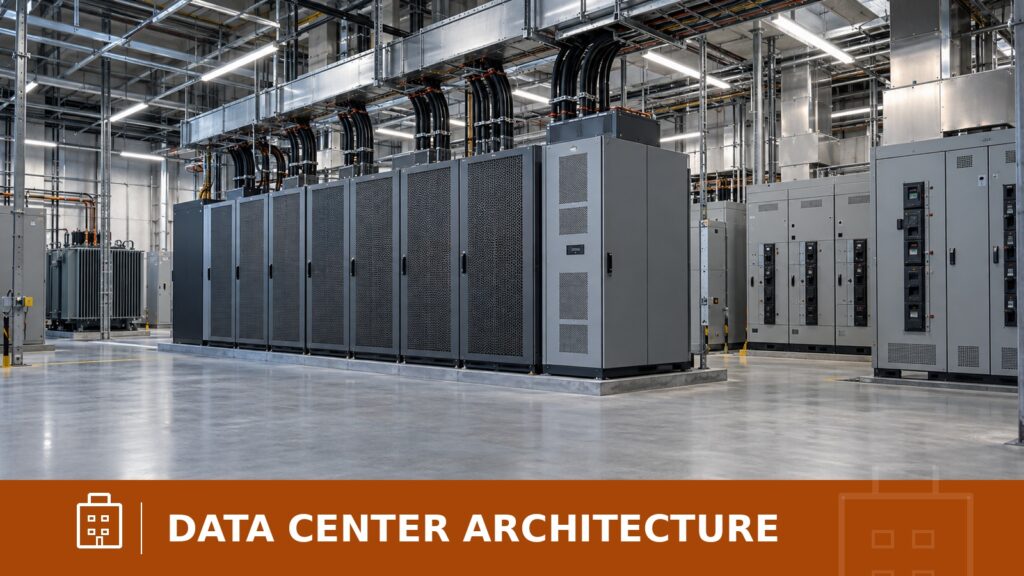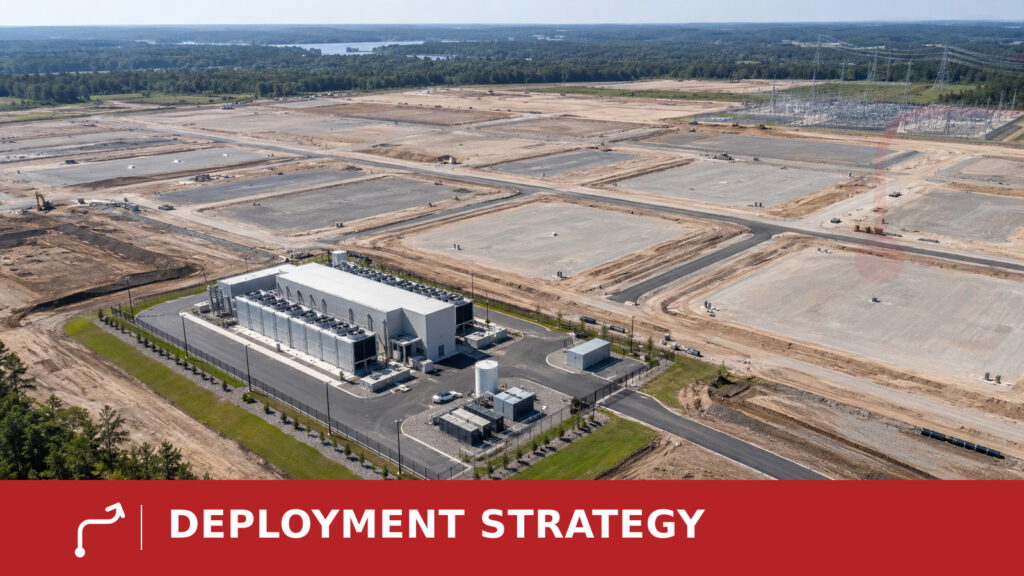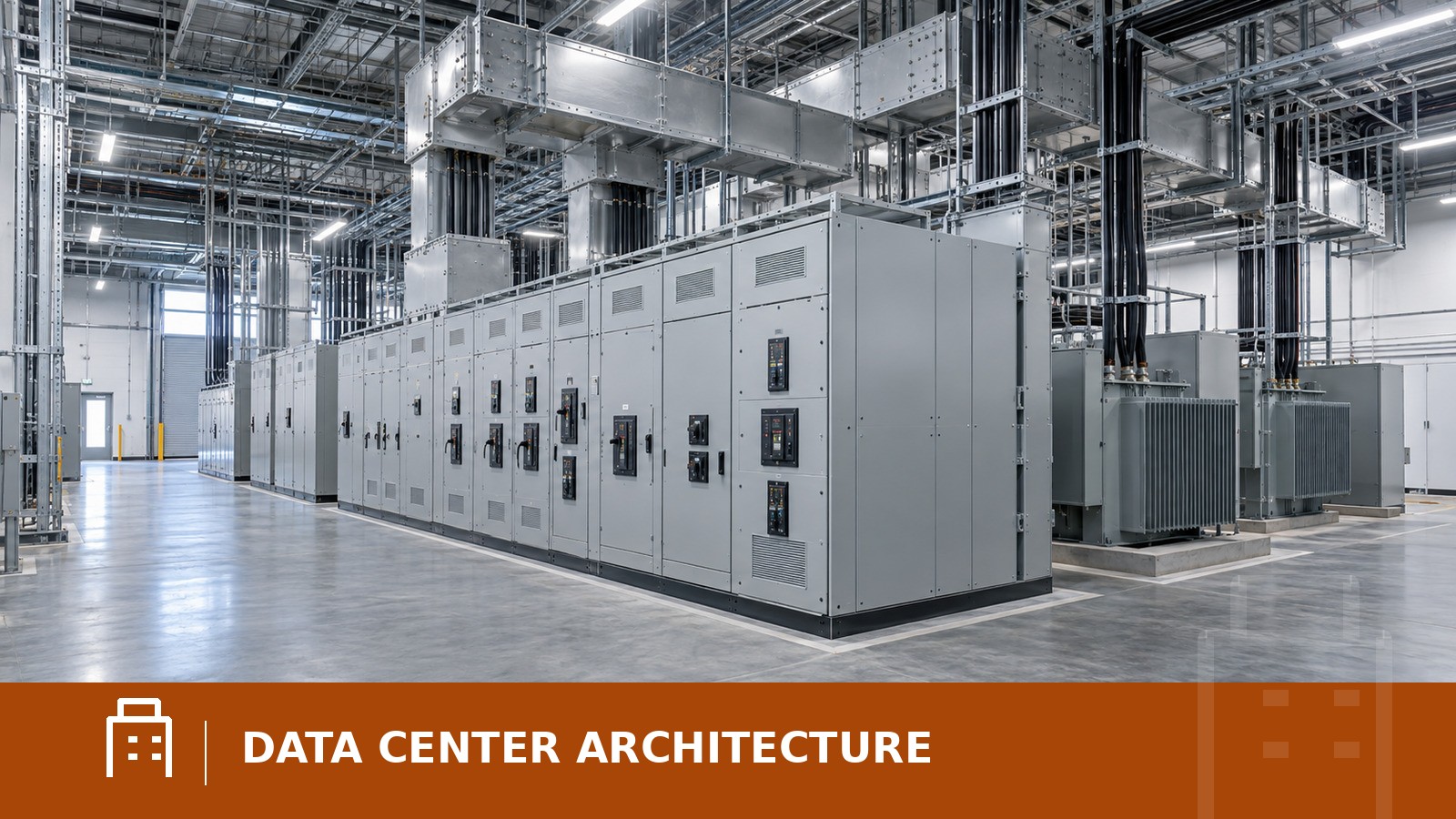
At conventional density, distribution can be treated as a detailed electrical design task that follows the larger facility plan. AI-scale loads change that sequence. As load density and current increase, the architecture of the power path begins to shape the options available to the entire project: how capacity is added, where equipment can be isolated, how maintenance is performed, and how a first phase accommodates the next one.
A Bus Bar Is Not the Decision
Conductors, busways, switchgear, transformers, protection devices, and monitoring systems all matter. But selecting any one of them is not the strategic decision. The system question is how the full distribution path supports the operating model the site needs to achieve. That includes the initial load, the credible expansion path, the fault and maintenance boundaries, and the practical limits imposed by physical space and construction sequencing.
Four Questions Should Be Resolved Together
First, how will capacity be added without reworking the initial operating environment? Second, where are the service and isolation boundaries when equipment needs maintenance or a fault must be contained? Third, does the physical layout preserve access, clearances, and room for expansion? Fourth, does the architecture leave future options open as compute density and equipment choices evolve?
These questions cannot be answered responsibly by looking only at conductor size or the nameplate of a single component.
The First Phase Should Not Become the Constraint
A common failure mode is to make phase one workable in isolation and discover later that the original routing, protection boundaries, or equipment placement constrains expansion. The result can be avoidable downtime risk, costly rework, or a larger-than-necessary redesign.
The better discipline is not to overspecify everything on day one. It is to make deliberate decisions about which elements must be expansion-ready and which can be added as demand is proven.
Serviceability Is an Operating Decision
High-current distribution is often evaluated through capacity and capital cost. Serviceability deserves equal attention. An architecture that is difficult to inspect, isolate, maintain, or safely modify can create operational exposure long after construction is complete.
The relevant test is straightforward: can the team perform foreseeable work without putting the broader compute environment at unnecessary risk?
The Architecture Must Work With the Power Plan
Distribution does not exist separately from utility service, on-site generation, energy storage, conversion equipment, cooling systems, and compute deployment. Each decision creates constraints for the others.
A credible design therefore starts with the desired first productive state and the expected path to permanent capacity, then checks whether the distribution approach can support both without closing off reasonable alternatives.
Why This Belongs in the Technical Conversation Now
The point is not that one standard layout fits every facility. It is that high-current distribution has become an architecture-level issue for facilities that must accommodate changing density, phased buildout, and demanding availability expectations.
The Decision Standard
The right question is not simply, What is the bus-bar detail? It is, What distribution architecture lets this facility add capacity, service equipment, manage operating risk, and adapt without forcing avoidable rework?
When that question is addressed early, detailed equipment choices can be made in service of the project rather than defining its limits.
Continue Your Infrastructure Decision
Explore Data Center Architecture for the broader decision context, then use the Technical Library to investigate the technical questions behind it.